






Sabine Marcelis takes a moment to reflect in first museum exhibition
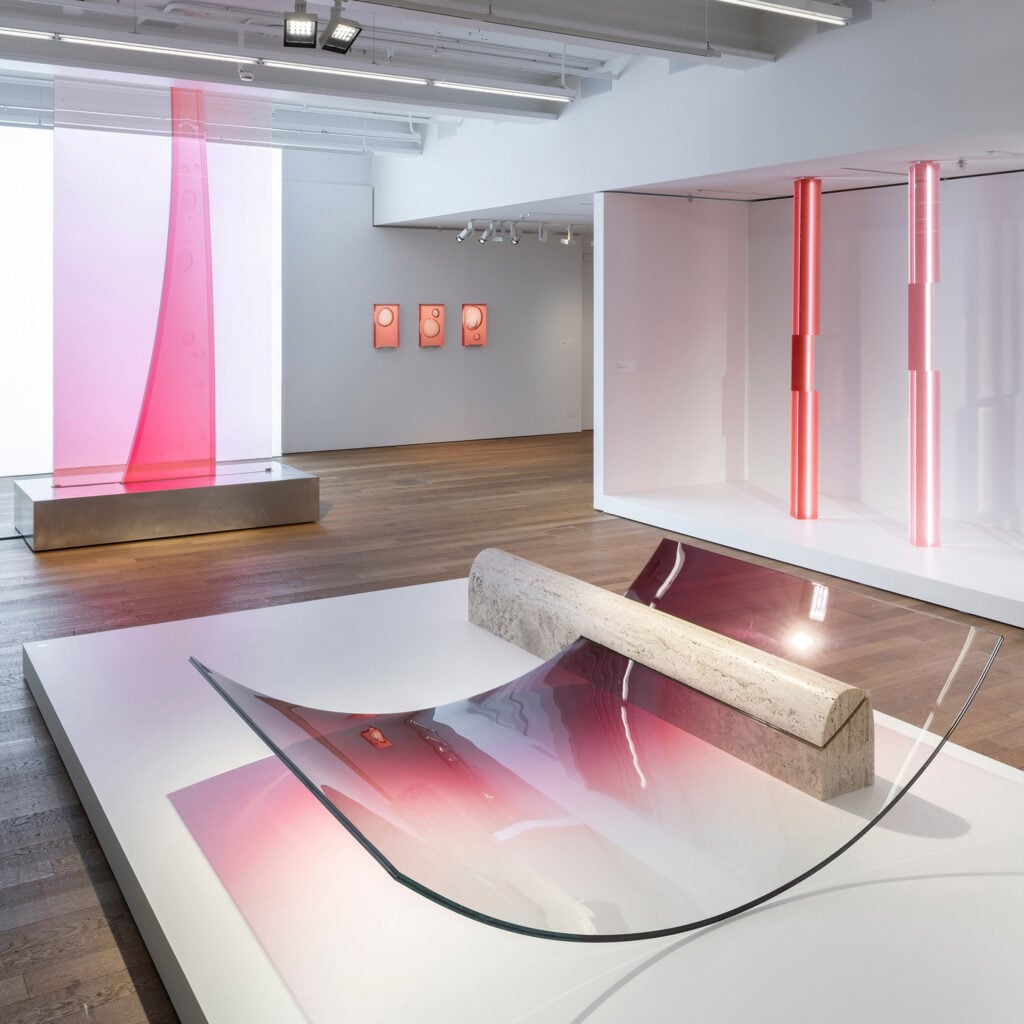

Sabine Marcelis has a knack for creating viral objects, from IKEA's most-sold light to her mesmerising Candy Cube tables. Now, the designer is revealing the method behind her "magic" in an exhibition at Zürich's Museum für Gestaltung.
Light and Color is the first museum show dedicated entirely to Marcelis's work since she founded her studio 15 years ago.
In that time, the Rotterdam-based Kiwi has gone from being a student at the Design Academy Eindhoven to one of the most prolific and in-demand designers working today.
"This is the first time a museum has brought so much of my work together in one place," Marcelis told Dezeen. "I’m always so preoccupied with what’s next that I don’t like to look back so much, but it’s amazing to have this moment to actually stop and look back for a minute."
"It feels pretty special," she admitted.
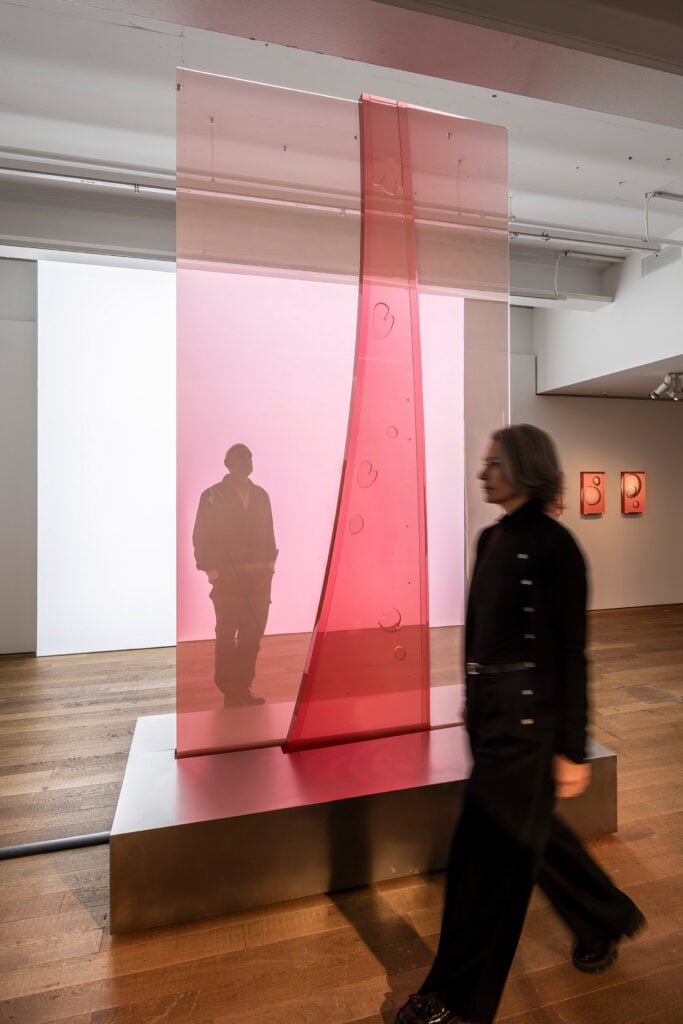
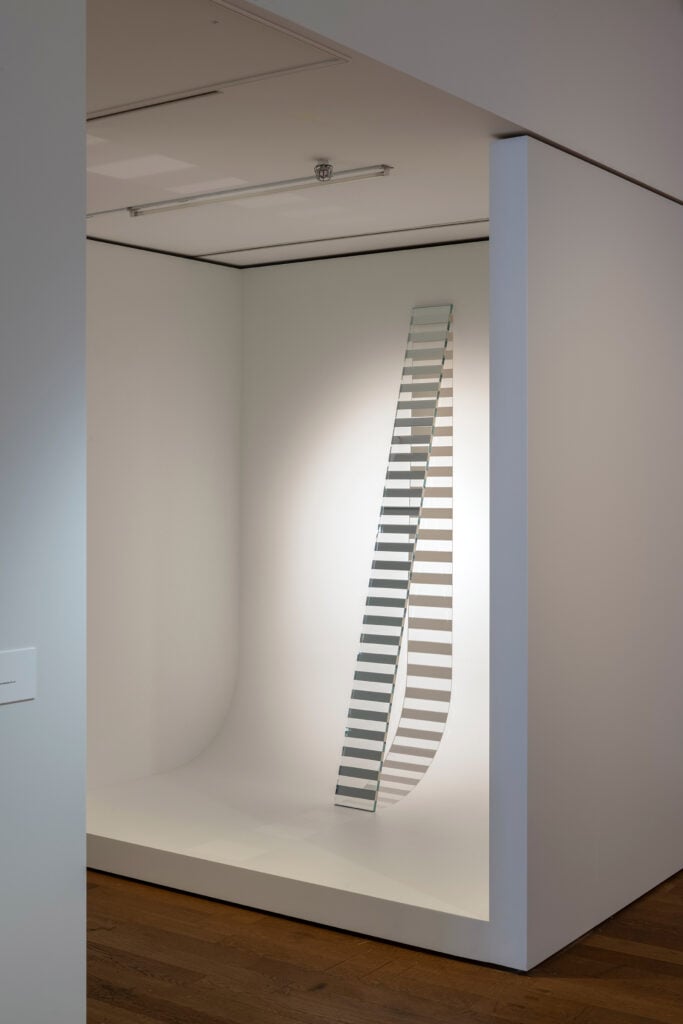
The show brings together 17 key pieces from the last decade and a half, going as far back as Tall Stripe – the first of many mirrors – and her signature resin Candy Cubes, which first catapulted the designer to international acclaim in 2014.
But Marcelis is adamant it should not be considered a retrospective.
"I didn’t want the show to feel like a retrospective in the sense of a chronological archive," she said. "I wanted to select a variety of projects that each show a different way of working with light and colour."
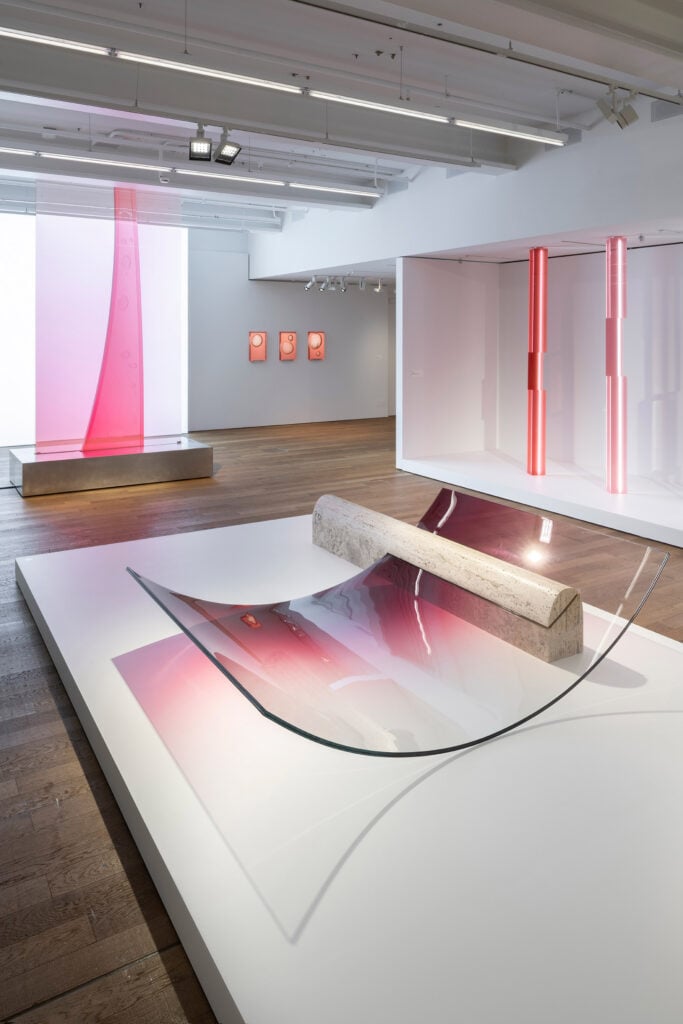
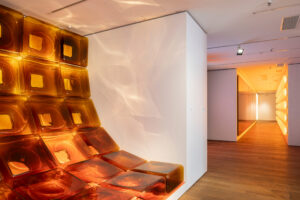
Rather than chronologically, the exhibits are arranged by colour, blending into each other like the soft gradients she favours in works like her curved glass chaise longues for the Barcelona Pavilion.
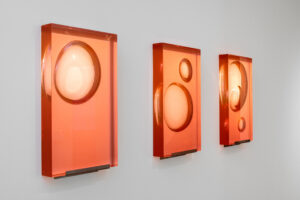
Her favourite materials – glass, resin and stone – recur throughout the exhibition, with carefully placed spotlights showing off the play of reflections and shadows the designer has learned to elicit through years of experimentation.
A prime example is her Lokum coffee table for Acerbis, stacked on top of each other on a curved wall to show the gradients of colour and water-like reflections created when the glass is seen at different angles and levels of illumination.
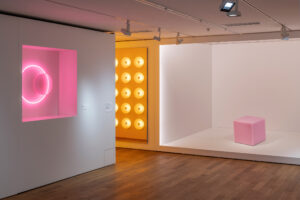
There are also two room-scale installations, reminiscent of Yayoi Kusama's Infinity Mirror Rooms, throwing back endless reflections of Marcelis's viral IKEA "donut lamp" and the towering three-metre-tall Column lava lamp for Mathmos.
For the show's curator Damian Fopp, these are less about Instagram bait and more about allowing visitors to experience the full visual effect of these objects in real life, rather than through a screen.
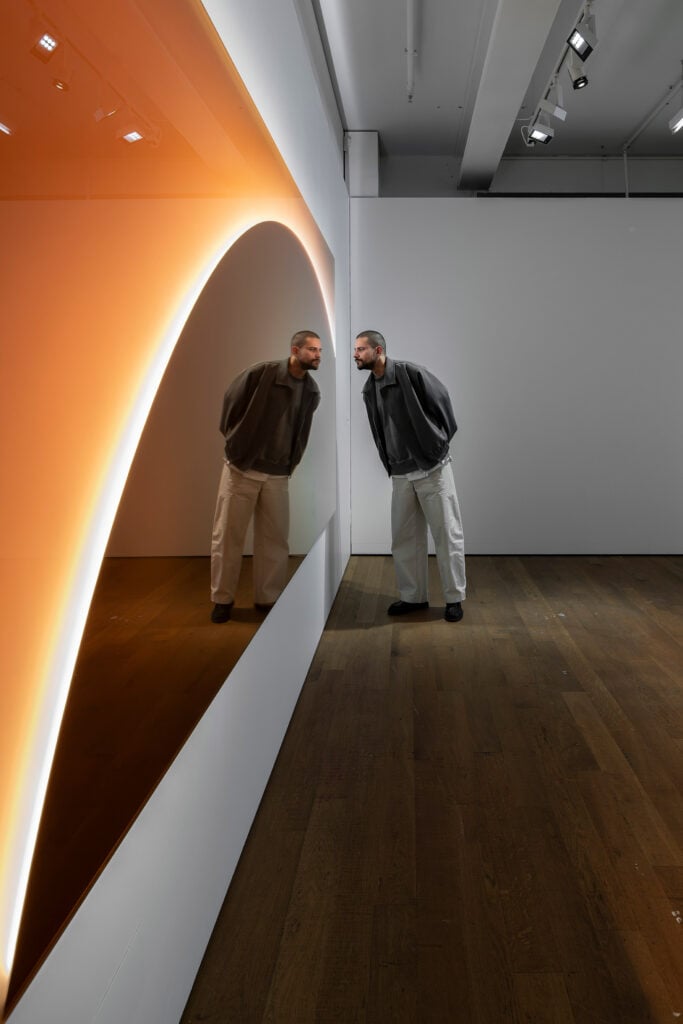
"Her work circulated widely as images, but no institution had looked at it as a whole," he said. "This also made it interesting to shift the conversation back from online to physical."
"And we wanted to show what lies behind those calm, effortless images: the testing, prototyping and production that I discovered when I visited her studio in Rotterdam."
A mini-documentary and a book commissioned for the exhibition pull back the curtain on what it takes to create these perception-bending pieces with her team.
Over the years, these have become more ambitious in scale as well as sustainability, pivoting to 99 per cent biobased resin for her production and creating installations for the likes of Coachella and Apple HQ,
But no matter the size of the project, Marcelis says that materials remain her North Star.
"I wrote a one-sentence summary of what my studio does ten years ago," she remembered. "'A studio for material, installation and object design. Forever in search of magical moments within materiality and manufacturing processes to create unexpected experiences.'"
"I wouldn’t change that sentence today if I had to make the same summary again."
The post Sabine Marcelis takes a moment to reflect in first museum exhibition appeared first on Dezeen.