









How a Facebook post led to the resurrection of a space-age architectural icon
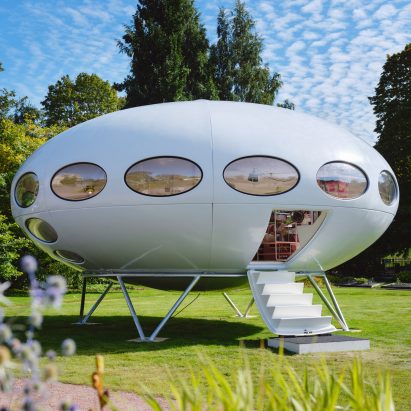
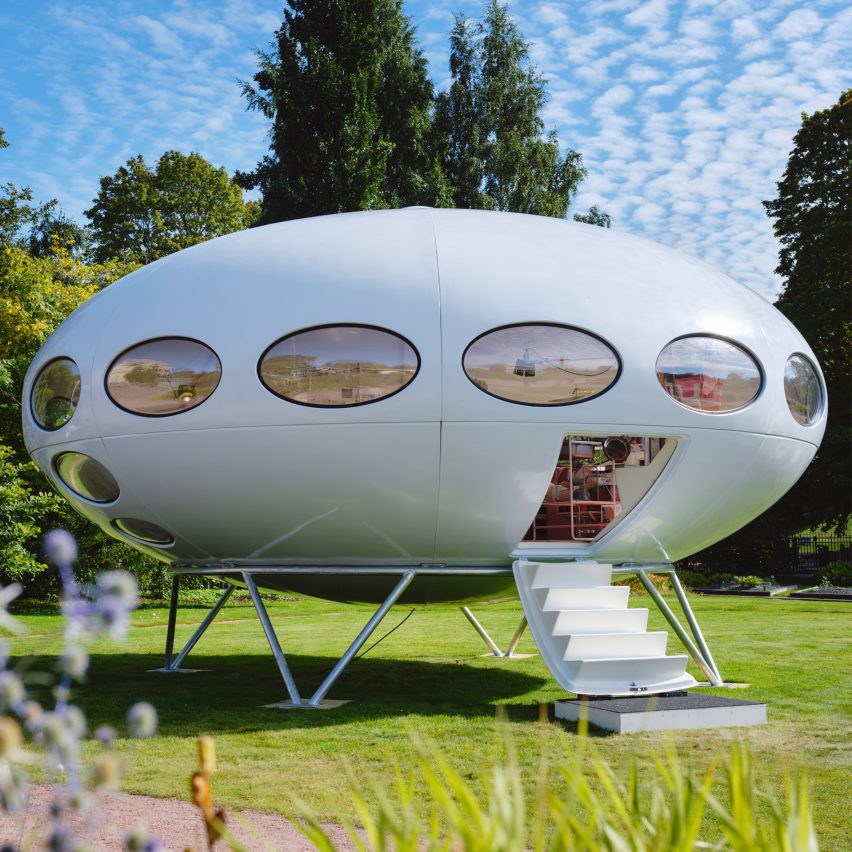
A Matti Suuronen Futuro House has been manufactured for the first time in decades and decked out by Finnish design brand Marimekko for Helsinki Design Week.
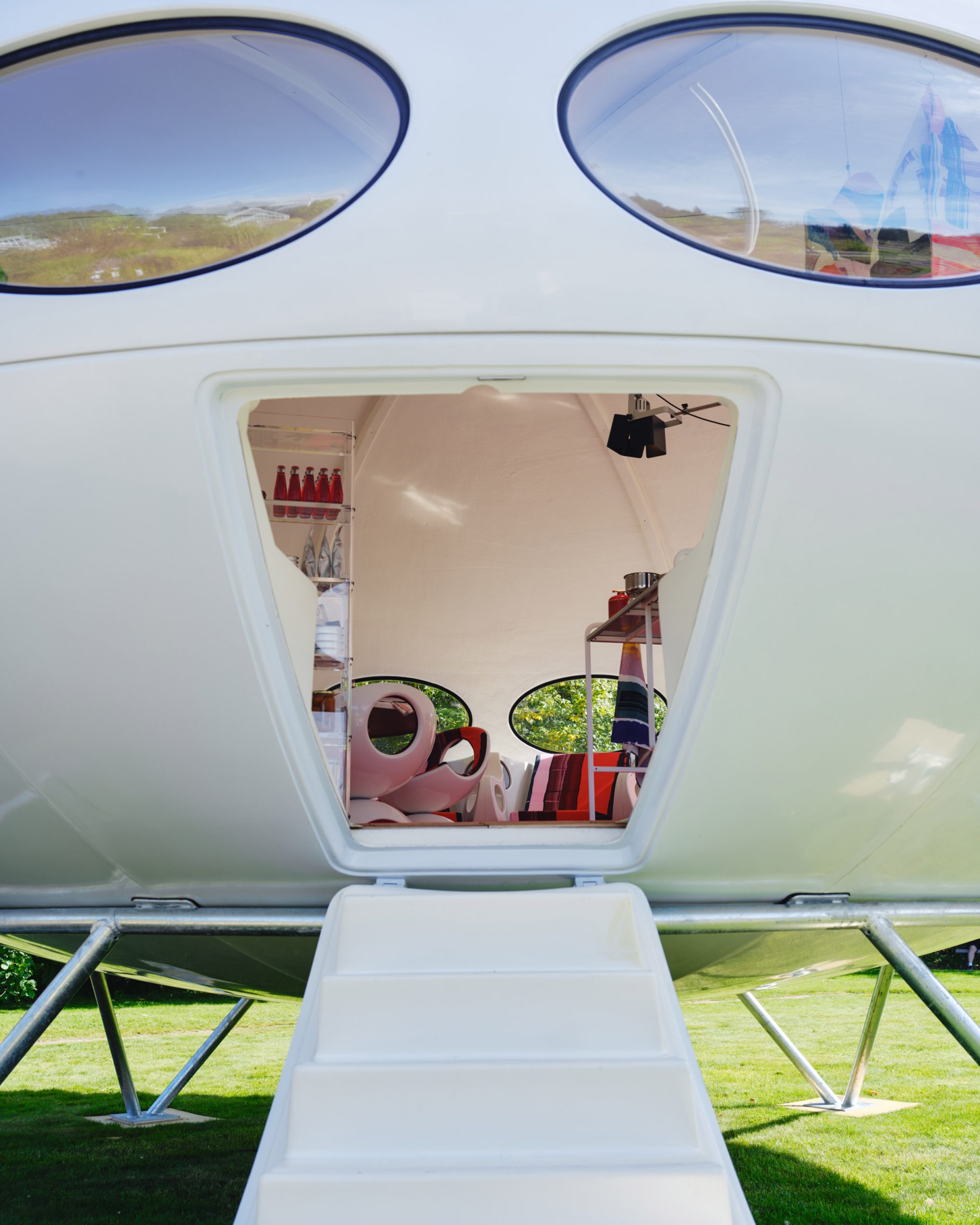
The famously flying-saucer-like structure recently landed in Kaisaniemi Botanical Gardens as part of the Finnish capital's annual design festival.
Initially conceived as a transportable ski cabin by Finnish architect Matti Suuronen in 1968, the Futuro House is among the most distinctive emblems of space-age architecture.
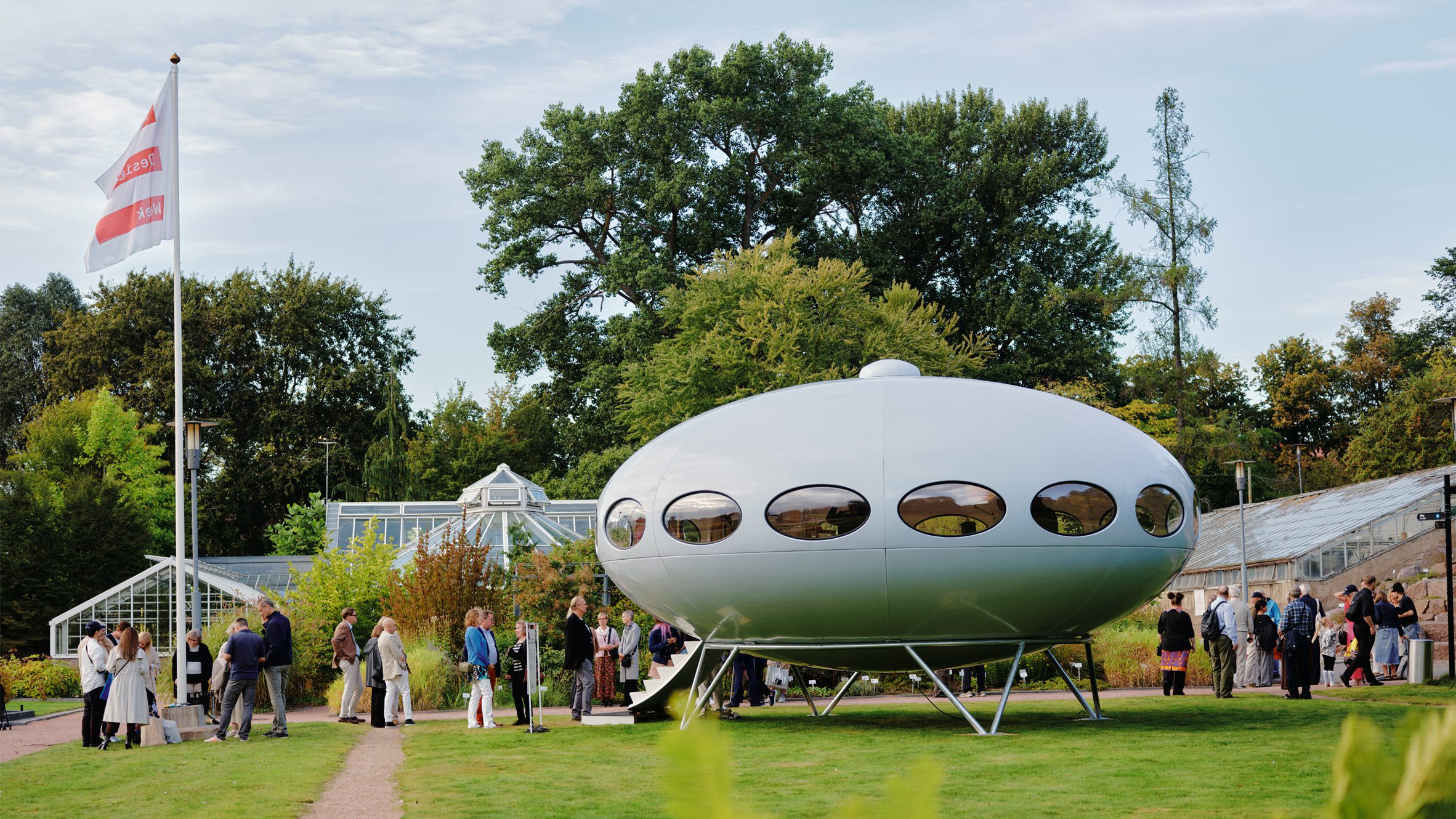
Prefrabricated in fibreglass-reinforced plastic, it was once described by British critic Justin McGuirk as "the closest housing ever came to product design".
Despite being intended for mass production, fewer than 100 were made worldwide. Manufacture ceased shortly after the 1973 oil crisis, which sent the price of plastic rocketing.
Around 60 are estimated to still be in existence, scattered across the globe in varying states of repair.
That number became one greater recently for the first time in decades, thanks to a project that began in 2024 when Dutch-American preservationist architect Jan van Dijs was alerted by a friend and client to an unusual post on Facebook.
An executive at a Finnish materials firm, Exel Composites, was selling the original Futuro moulds.
"How fascinating if we could actually do this"
At this point, Van Dijs, who has spent much of his career restoring mid-century houses in California, was only vaguely familiar with the Futuro Houses.
"I dug in a little bit, I started to learn about the history," he told Dezeen. "And I start to realise that it's something of a fascinating story."
"And I really had my doubts that all the pieces were there, that they could be restored, so I tried to keep all of that in check," he added. "But I certainly had started to make an emotional connection to how fascinating this could be if we could actually do this."
Twenty Futuro Houses had been fabricated in its native Finland originally, by plastics company PolyKem.
Exel had acquired PolyKem's assets, including the Futuro moulds, after the fabricator went bankrupt in the early 1990s – a difficult period for Suuronen that reportedly culminated in him and his wife losing their home.
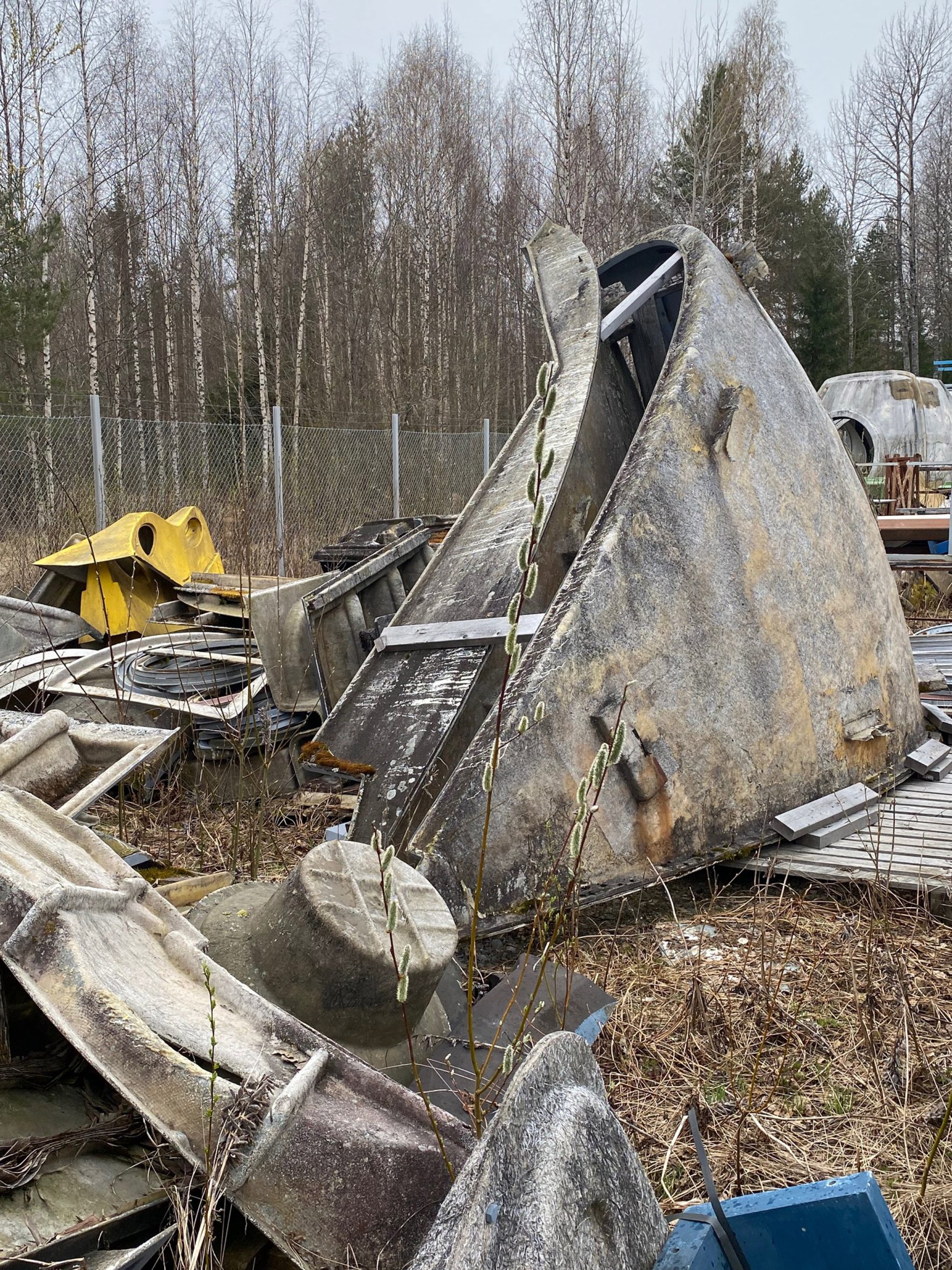
In the decades since production stopped, the moulds had been periodically moved between various forms of storage without a purpose.
Suuronen died in 2013, and so once hooked on the Futuro story, Van Dijs spent several months trying to engage with the architect's family.
"I couldn't just buy the moulds and build this thing – I needed to have a license, and I needed to have their support," he said. "The reality was, unless I could do that, there was no future for this project."
The Suuronens were hesitant, having been contacted several times over the years about poorly thought-through schemes on a similar theme.
But eventually they were persuaded with help from the Exel man, Jyrki Aho, who died a short while later.
"The moulds looked like hell"
When Van Dijs flew out to see the moulds in May 2025, they were languishing in a field and nearly 60 years old.
"The exterior of the moulds looked like hell," he remembered. "I mean, there was grass growing out of them and moss covering them, and it looked really bad."
Nevertheless, the decision was made to proceed, and Van Dijs worked with Finnish plastic fabrication company Ekin Muovi to restore the moulds and recast the panels with the aim of producing a faithful reconstruction of Suuronen's design.
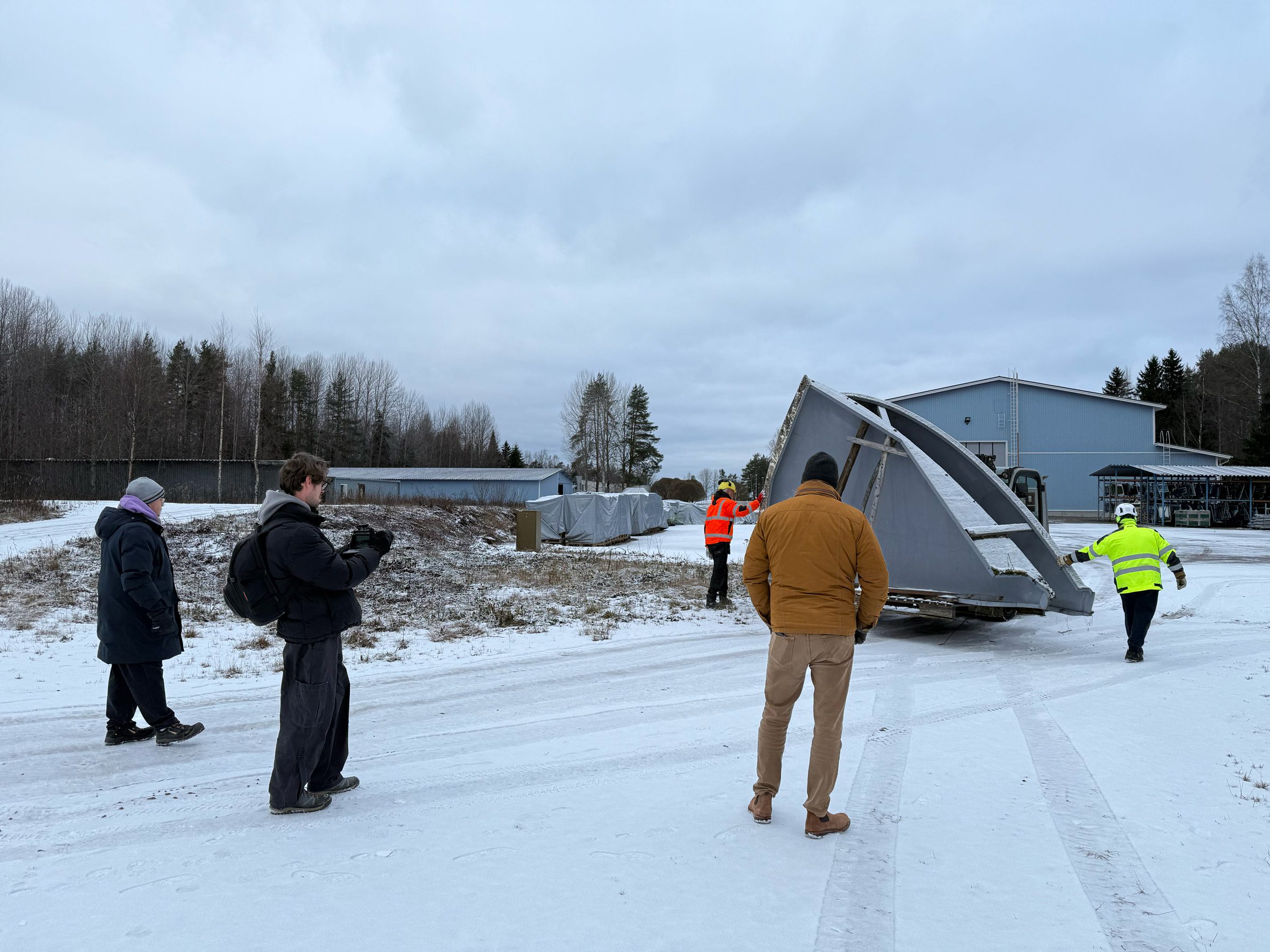
Even the same paint colours were used, having been matched from scraps that remained on the moulds.
It was a step into the unknown for Van Dijs, and he admits the process was trickier than he had anticipated.
While today plastic moulding uses two tessellating pieces – one to pour the cast into and one to press over it to squeeze out all the air – Suuronen's are one-part moulds, meaning air bubbles must be eliminated manually.
"It's all hand labour," said Van Dijs. "Nobody does it like that anymore."
Casting a single panel therefore took days instead of hours and was very labour-intensive – "no doubt a large contributor to the problems faced by the Futuro in the 1970s", Van Dijs suggests.
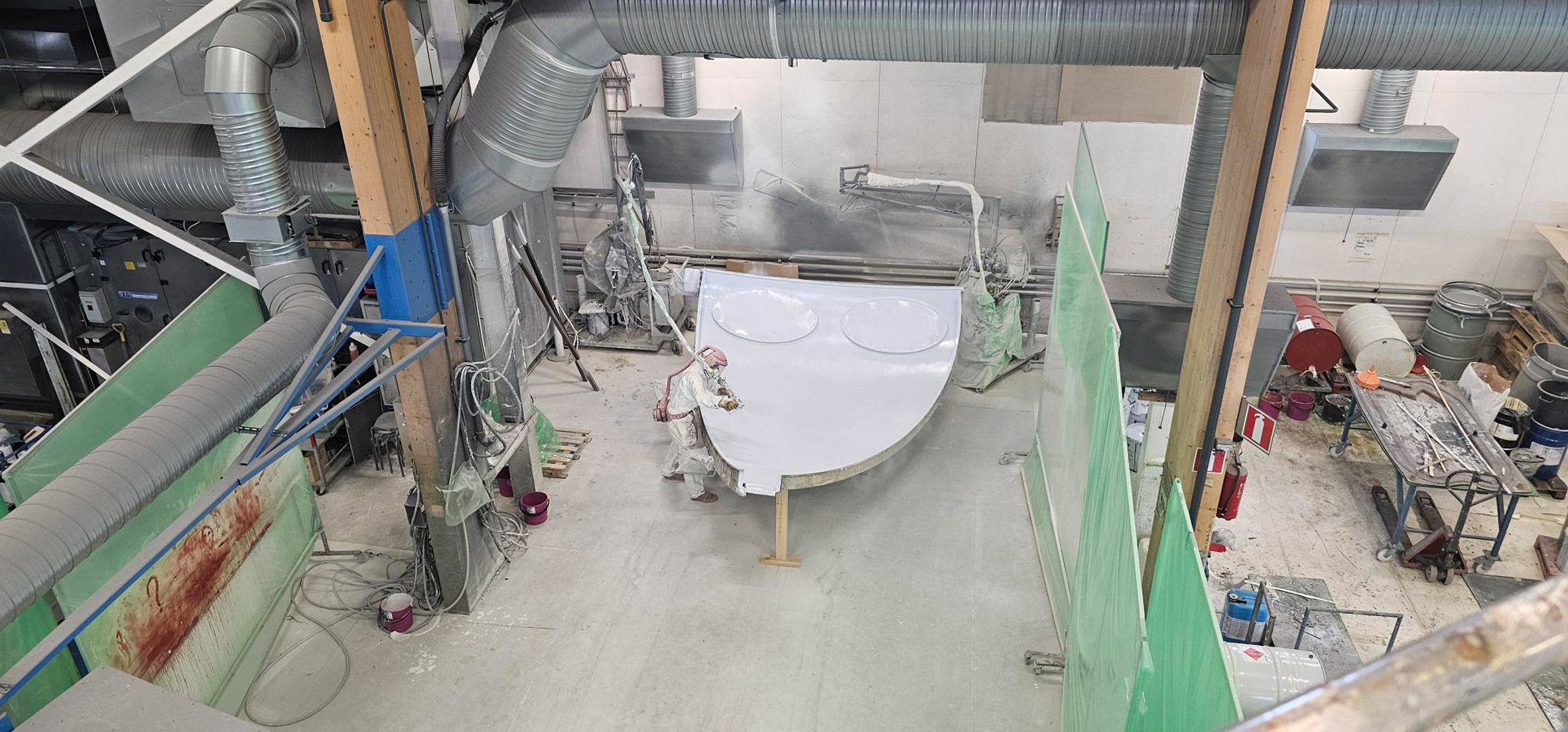
There were pleasant surprises as well, however. Unexpectedly, the moulds being sold by Exel included furniture designs by Suuronen, which have also been reproduced as part of the project.
They include built-in lounge chairs, a dining table, and the Orbit chair.
The fabrication process took five months, including some mishaps along the way. Including the restoration of the moulds, Van Dijs estimates the project has cost around 450,000 Euros, though he hopes further Futuros would cost less than 300,000.
In late June of this year, the 21st Futuro House to be made in its native country was completed, ready to be transported in several pieces for reassembly at its temporary home on the Kaisaniemi lawns.
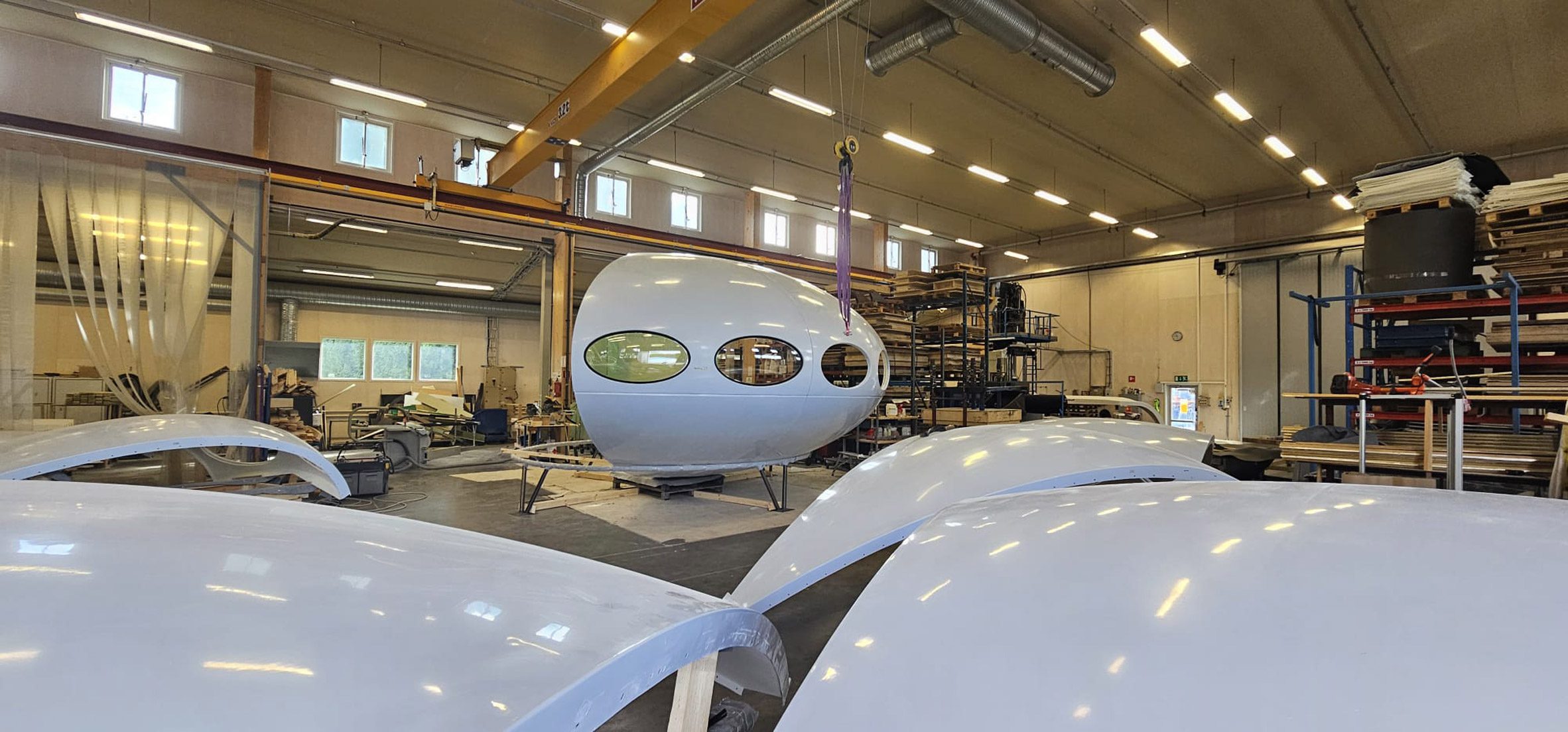
For the Helsinki Design Week installation, Marimekko was invited to create an interior for the new Futuro House.
It opted to divide the open space into three areas – one for lounging and sleeping, one for eating and working, and a kitchenette.
"It was really important to sort of create a proposal for future ways of living," Marimekko creative director Rebekka Bay told Dezeen.
"That sounds like a big, grand statement, but we were really just intrigued by how we would live in the Futuro House today. I think there is a real trend for downscaling, and we felt that the Futuro House is sort of speaking to that."
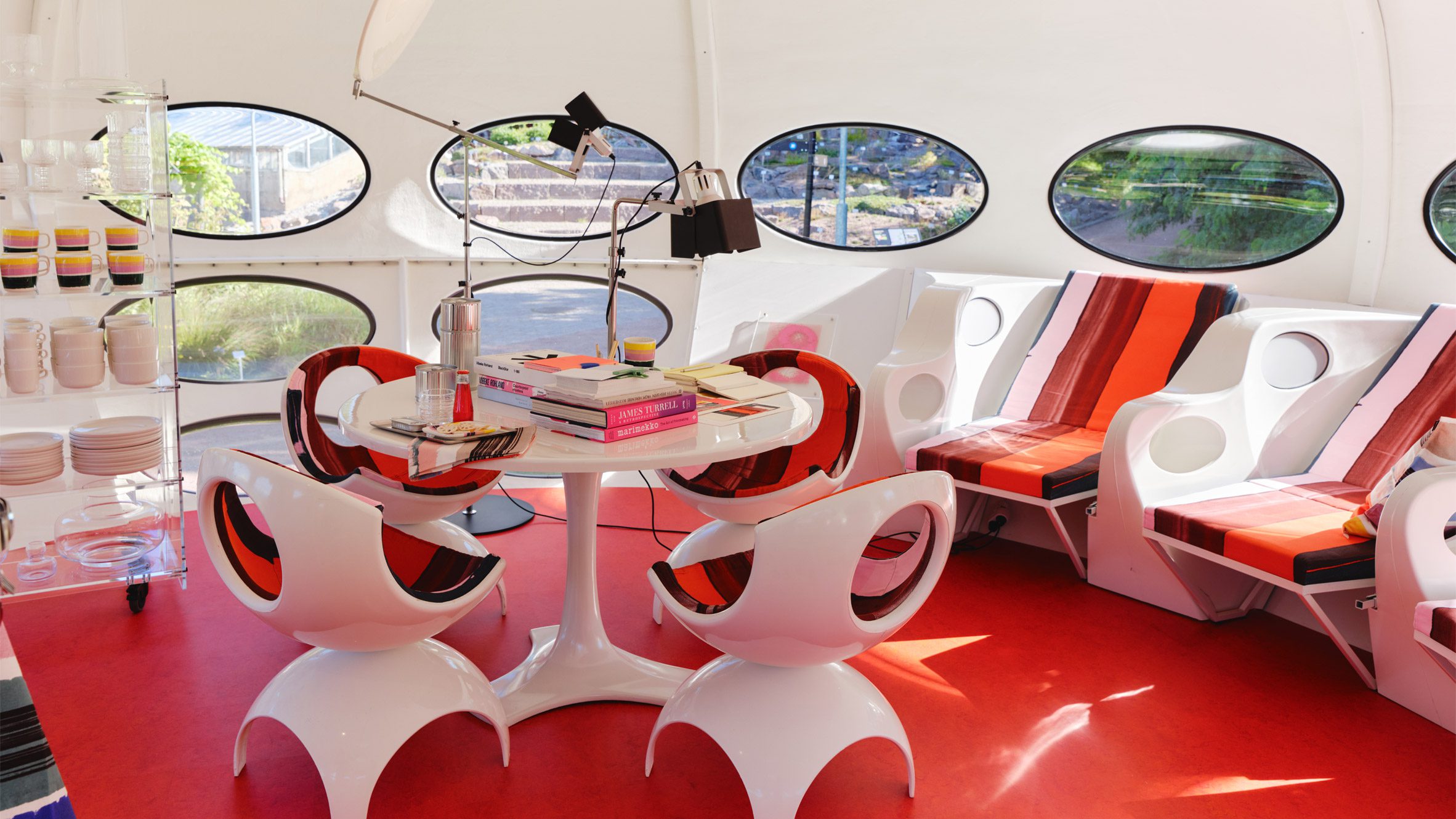
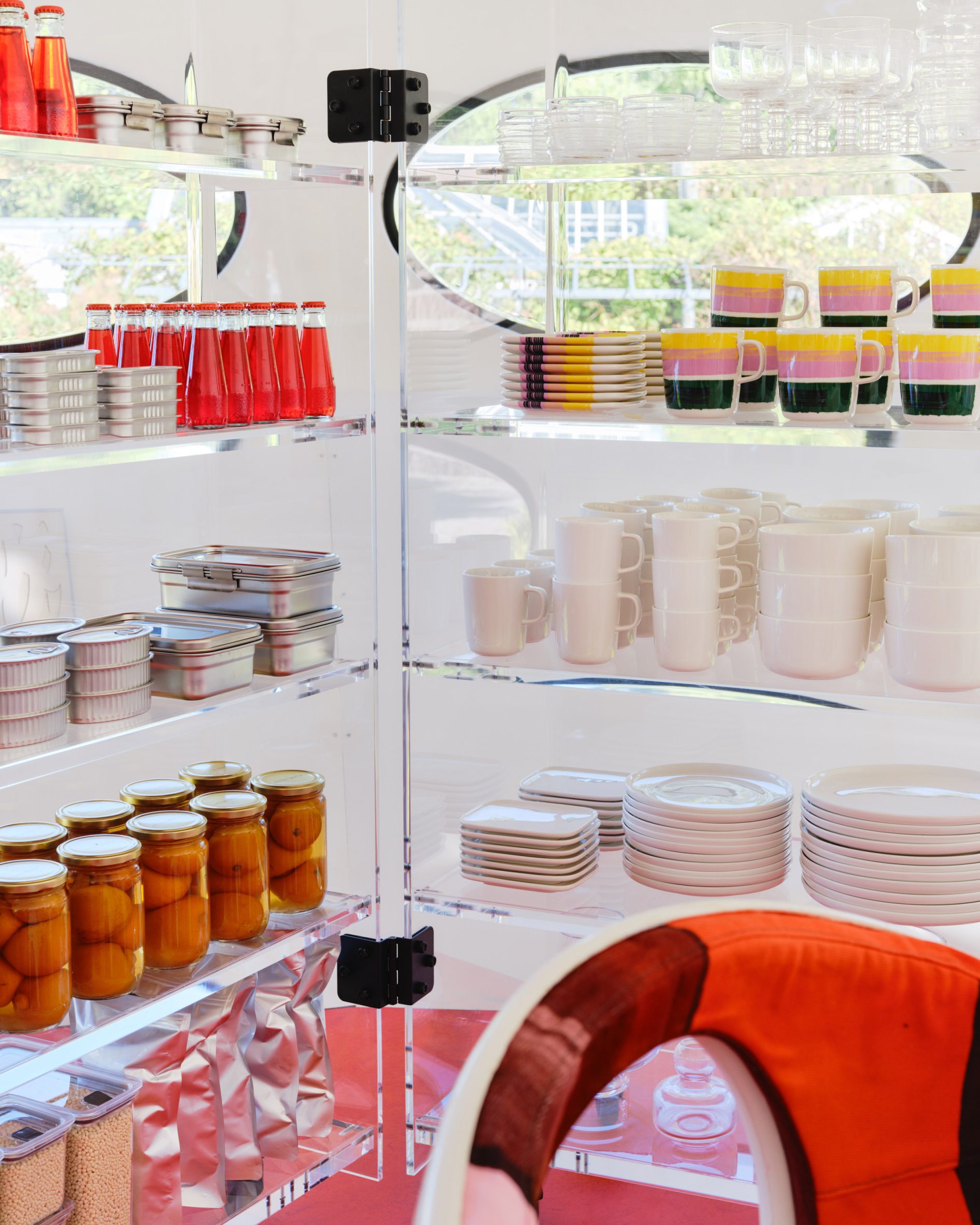
Marimekko products were displayed on perspex shelving units that double as transparent room dividers, while stripy prints created for the brand during a residency by Danish textile artist Vibeke Rohland were used to upholster the furniture.
"It would have been obvious for us, of course, to go back to our archives and find prints that were designed in 1968 when the house was also designed," said Bay.
"But we wanted to take the opposite route and propose something that had been created today. We convey certain images when we speak to the future, but we wanted our proposal to be sort of tactile, lived-in, friendlier, and were therefore intrigued to use brand new textile designs."
With design week over, discussions about the structure's future are now ongoing, though Van Dijs said his preference is for it to remain on public display in Finland.
"I hope it will move somewhere into the countryside and someone will be using it as their summer cabin," said Bay. "I think that would be wonderful."
Van Dijs also plans to produce new Futuro Houses to order – but the run will be limited.
"Casting moulds are just like the plates for a print; they are designed for a limited number of editions," he said.
"I think the original moulds were probably near the end of their lifespan when production stopped. Through a significant effort we were able to extend their life, but not forever."
He estimates that the restored moulds will support producing between four and six new Futuros. After that the moulds will be destroyed, and, in Van Dijs's words, "that will be the end of the original Futuros".
In his design, Suuronen focused on making the Futuro House quick to assemble, quick to heat and suitable for difficult terrains.
But it is also cramped, tricky to transport and dreadfully insulated, leaving it without an obvious practical use in 2026.
Nevertheless, Van Dijs is adamant that Suuronen's creation is more than mere whimsy.
"I would love to leave my home every day and go to my Futuro office, a small apartment, yoga studio, architectural book store," he suggested.
He regards the Futuro as an important touchstone for radical post-war optimism and creativity – the same conditions from which Marimekko was born in 1951 – and sees his project as a reigniting of that spirit.
"I think the Futuro should be considered an icon of Finnish design, which was not the case when it was originally produced," he said.
"This project allows us to see the Futuro as Matti Suuronen envisioned it – I think that's important."
Helsinki Design Week took place from 28 August to 6 September in various locations across Helsinki. See Dezeen Events Guide for more architecture and design events around the world.
Dezeen In Depth
If you enjoy reading Dezeen's interviews, opinions and features, subscribe to Dezeen In Depth. Sent on the last Friday of each month, this newsletter provides a single place to read about the design and architecture stories behind the headlines.
The post How a Facebook post led to the resurrection of a space-age architectural icon appeared first on Dezeen.