





Dezeen reports from New York's new November design week

A collection of showcases, old and new, took place in New York this November, effectively adding a second design week to a city already loaded with events. Dezeen's US editor Ben Dreith explores the offerings.
The as-yet-unofficial design week in the first weeks of November came into focus earlier this year, when trade fair ICFF, anchor fair of NYCxDesign, announced that in 2027 it will take place simultaneously with sister fair BDNY, which has been held in November for years.
The move has prompted questions in the city about the future of the NYCxDesign festival in May and what a November design week would look like.
While BDNY and high-end showcase Salon Art + Design have always been held in November, other design fairs have sprouted to take advantage of the opportunity to show during this busy period.
The week is positioning itself, without any explicit organisation, as a massive event in the New York design calendar.
Even NYCxDesign, still scheduled for May as usual in 2027, held a November event bringing in designers Ross Lovegrove, Karim Rashid and Rem D Koolhaas for a talk moderated by New York-based design writer Camille Okhio.
The panellists spoke about the potential for AI and derided the inclusion of craft in conversations about design. However, as writer Debika Ray noted in an opinion piece for Dezeen, crafted, one-off pieces have lately come to dominate design shows.
NYCxDesign staking out a talk with well-known industrial designers suggests that its May event could be devoted to industrial design, while November complements it with a focus on collectible furniture.
This was definitely true this year, when collectible designs dominated the November showcases.
Among these was the Brussels-founded design fair Collectible. For its third New York iteration, it moved from office tower-turned creative hub WSA to a defunct movie theatre on the Upper East Side that is being developed by entities related to WSA.
While the unfinished theatre fit the experimental nature of the work, the execution was, by some accounts, chaotic, with one worker being sent to the hospital after an unstable light fell onto her head.
Collectible called it an "isolated occurrence involving an exhibitor's equipment".
"The safety of our exhibitors, staff and visitors is a priority, and we take any reported incident seriously," a representative for Collectible told Dezeen.
"Collectible maintains safety procedures for the fair and expects all exhibitors to ensure that their own equipment is installed and secured appropriately."
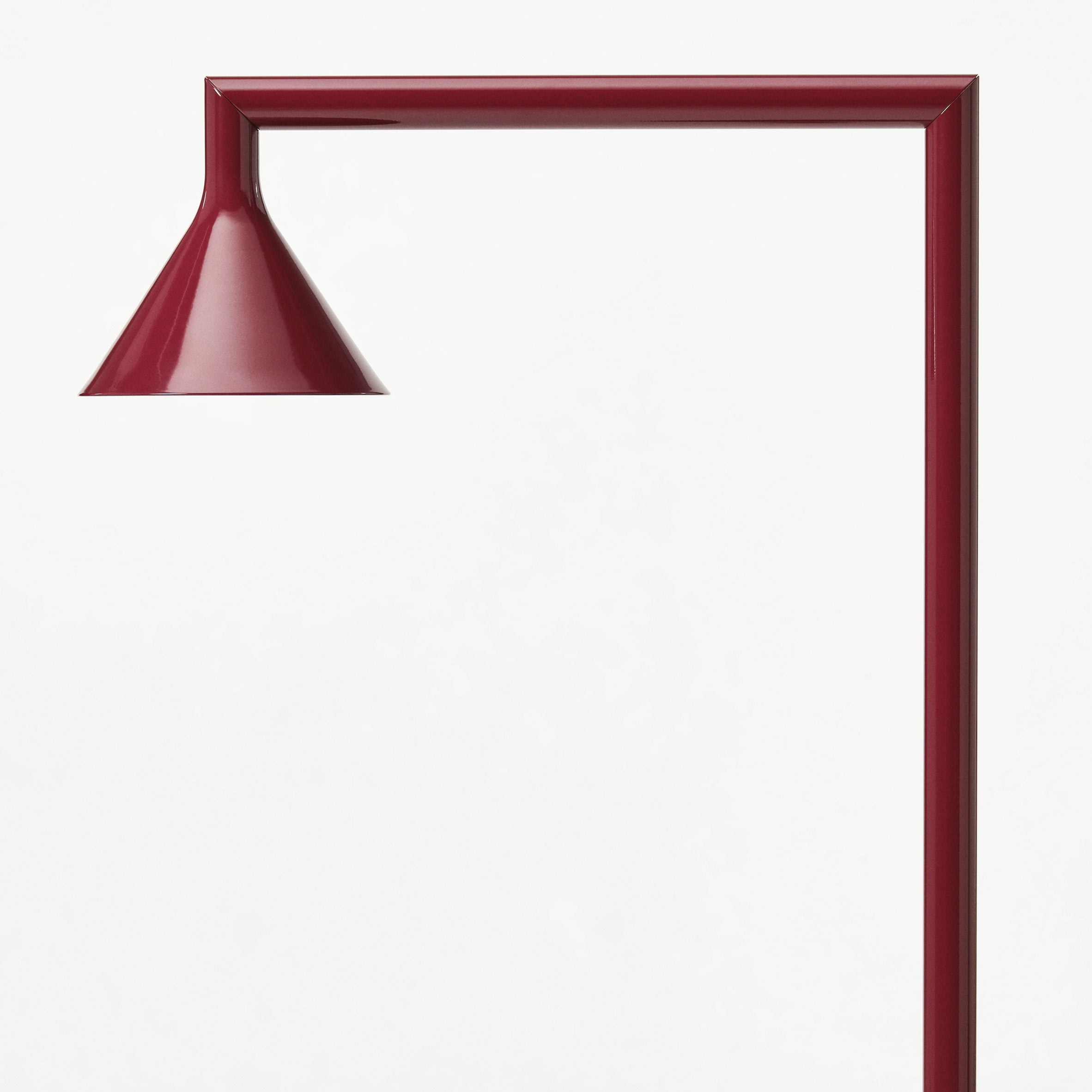
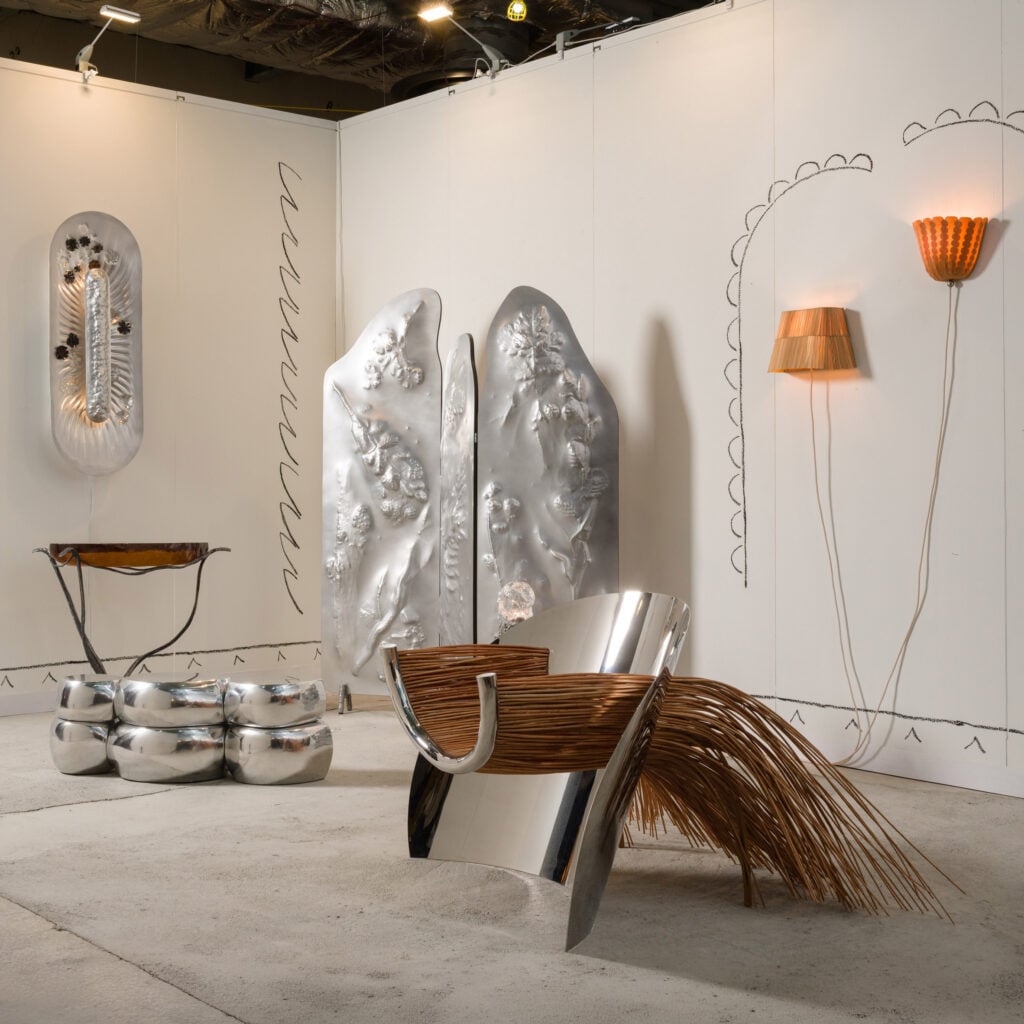
Despite some chaos, including recently laid cement, there were strong showings. Philadelphia-based Dudd Haus showed a pared-down booth with its usual mix of conceptual one-offs. Particularly of note was a milled-aluminium floor lamp by Jordan Maurice and a paravent made with telephone cords by Overt Cove.
Also eye-catching was a booth of droopy glass lamps and shades with erotic overtones by Upstate New York gallery Freaks, and another sensual booth with drapes and lacquered furniture by Iitem studio.
The fair's scenography carried the sleek, modern, USM-laden feel from the prior additions. Curators Alex Tieghi-Walker and Lynette Nylander designed special sections.
Bas-reliefs were popular on otherwise modern furniture, including a battened screen by Polish studio Wiktoria & Filip Bielicki for Objekt Gallery and a coffee table with raised ceramic on its base by Small Things Studio for Salon 21.
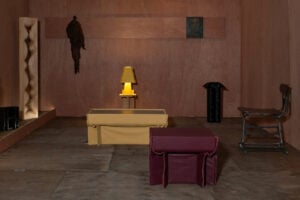
At Collectible, Montreal design collective Ensemble showcased its members' work on nooks in a wall made with USM panels.
This was just a taste of what Ensemble had in store for the week. The collective brought their signature experimentation to Yabu Pushelberg’s Tribeca studio, creating a plywood room-within-a-room to showcase work, including new lamps by Zebulon Perron, sculptural glass lamps by Alex Joncas, metal works by Jérémy Paguet, leather lamps by Jeta Studio and brass-lined mirrors by Jeremy Le Chatelier.
It was an extremely focused showing that proved sometimes you can do more with less.
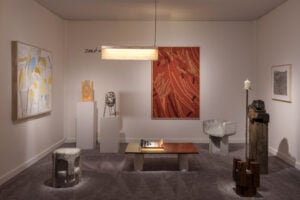
At Salon Art + Design, a few younger galleries stuck out from the historical work and ultra-high-end designs that usually characterise the fair.
Brooklyn-based Zarolat’s showing included ash-wood lamps with cellulose shades by Natural Urbano and Polybion, while New York-based hub for Brazilian furniture, Bossa Furniture, showcased a greatest hits of mid-century São Paulo makers, including Joaquim Tenreiro.
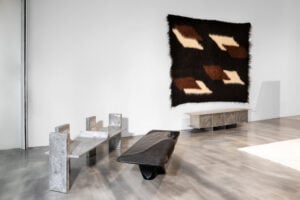
BDNY was, as usual, where most of the actual commerce took place during the week. While the interior designers and architects descended on the sample-forward showing, a few brands showed stand-out collections, including Sancal’s showing of Júlia Esqué’s playfully fringed armchairs and Santa & Cole’s modern, fun lighting.
Later in the week, LA-based Basic Space, run by the organisers behind Design Miami, returned to SoHo. With artistic direction by Alexander May, the stark, white-cube approach differed from the in-situ, multi-room afair that characterised the first New York Basic Space in 2025.

The fair featured a focus on big names and multiple co-curators competing for attention on the promotional materials and in the execution.
Standout pieces included the live-edge wood furniture with small metal connective elements by Brooklyn-based designer Gregory Beson, as well as Daniel Swarilov’s metal credenzas, in a section curated by Marquel Williams.
Paris-based Harry Nuriev created a metallic take on first-class airline seats as a standalone installation. Another booth featured an oversized sofa by NFL player Stefon Diggs' luxury furniture brand Si Vis Pacem, illustrating the fair's mix of design with celebrity culture.
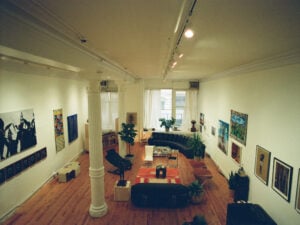
Finally, Mexico City-based creative studio Fábrica, run by artist Darryl Richardson and partner Maryah Ananda, held its La Sala showcase in a loft near Penn Station.
With a focus on international Black designers, the showcase featured art and design, with the space shaped like a living room by interior designer Johnathan Bailey.
Furniture pieces of note included a slim metal chair by Kai Avent-deLeo and an armchair by Mark Grattan.
The social focus of the event gave it an aesthetic heft, and a few of its stated goals, “community over curation” and “warmth over spectacle”, made it stand out from many of the other offerings from the week.
Judging by the willingness of the different fall fairs to join in, it seems likely that the November design week will fully take off.
The post Dezeen reports from New York's new November design week appeared first on Dezeen.