





Box 9 used “brick on every surface” in Soho restaurant Kid
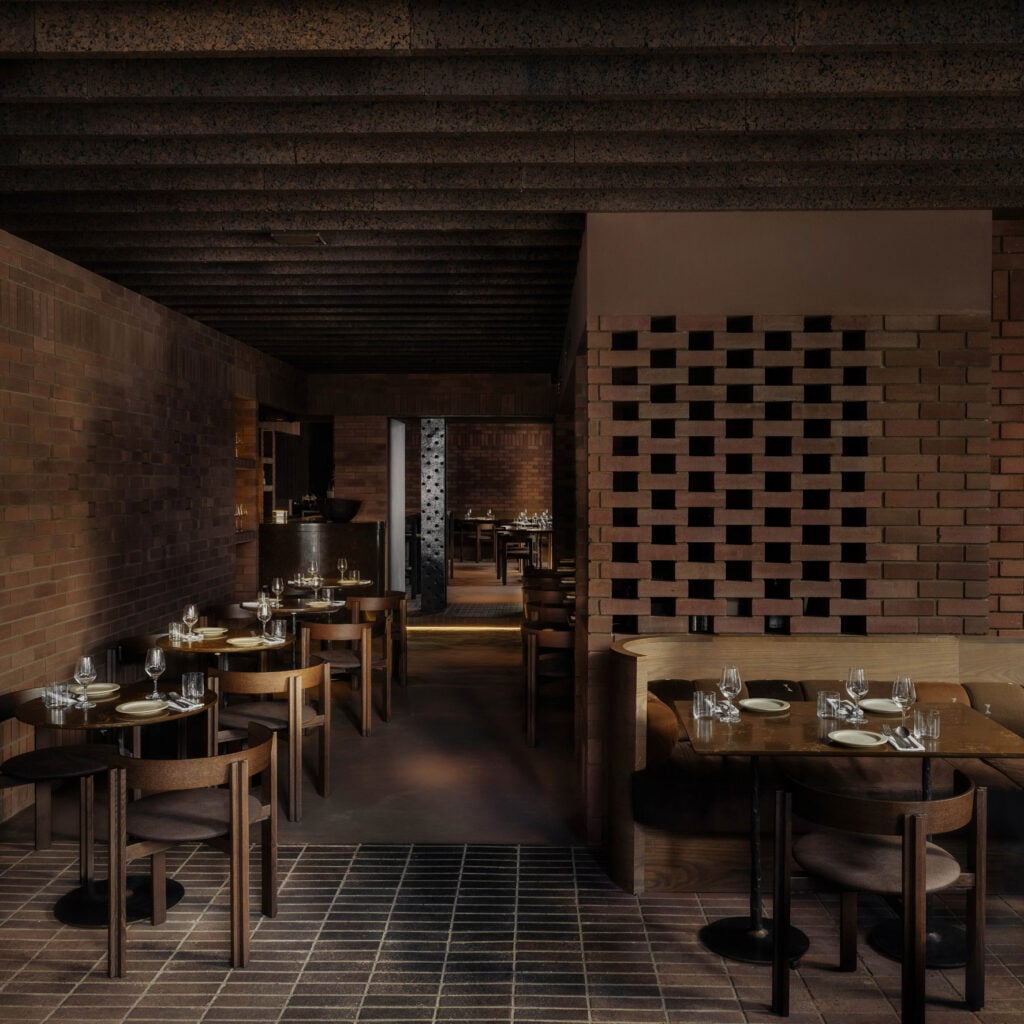

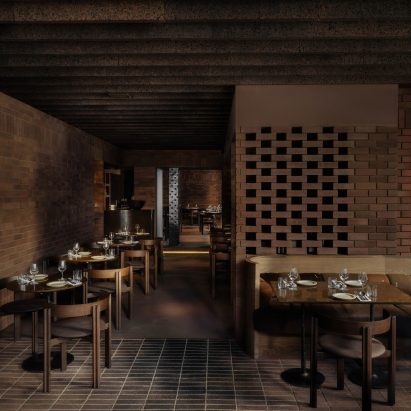
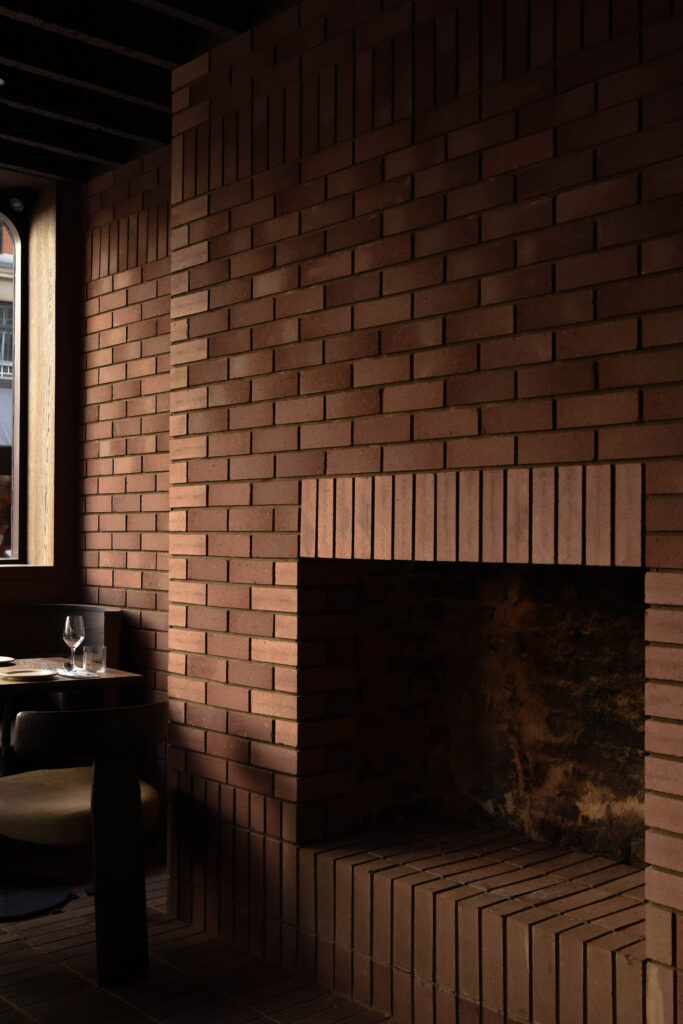
Local studio Box 9 has used bricks made from recycled construction waste for the interior of London restaurant Kid, where the material clads everything from the grill to the wine room.
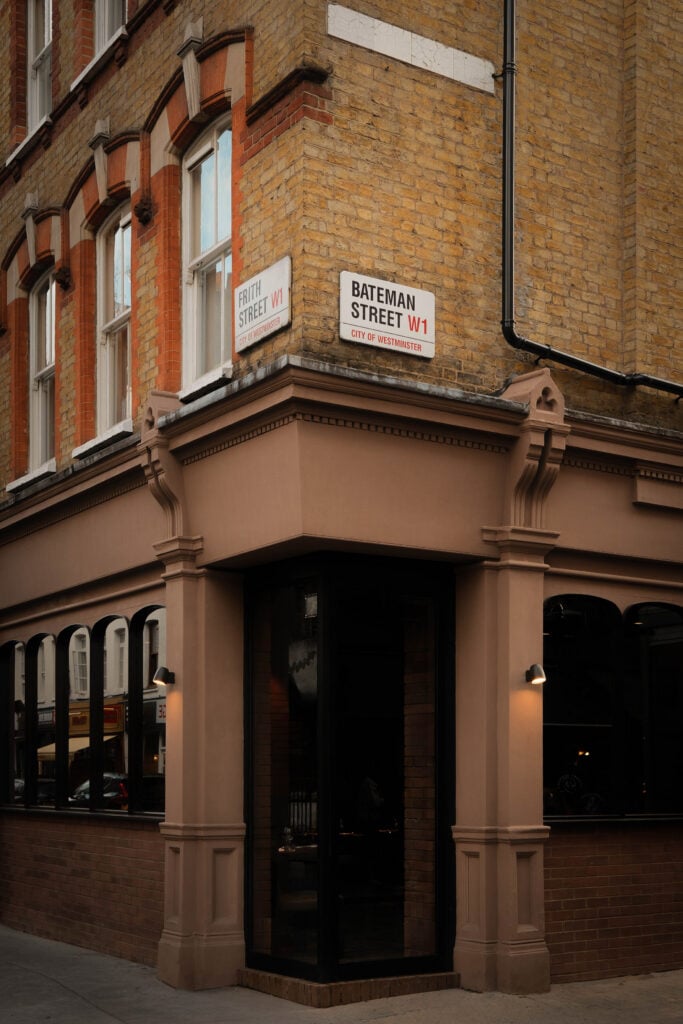
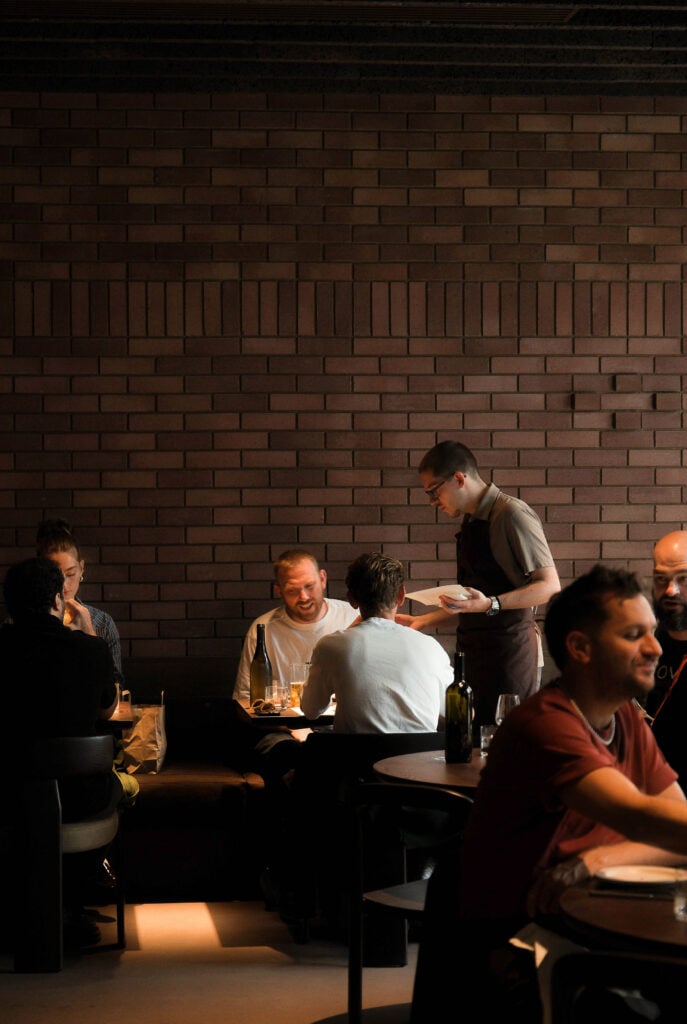
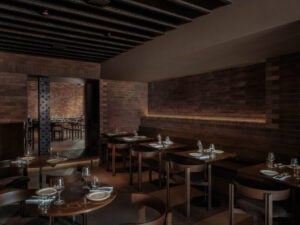
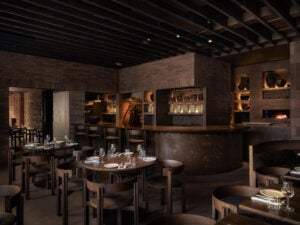
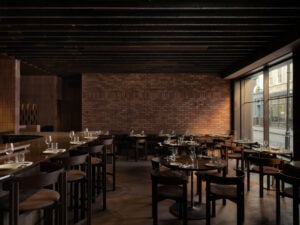
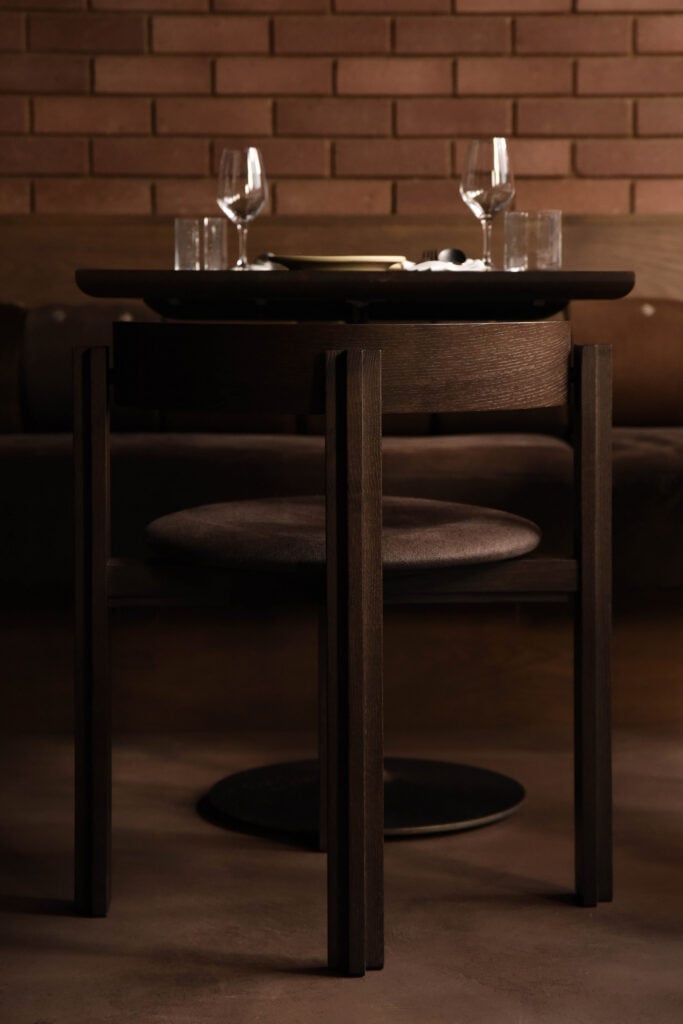
The 307-square-metre restaurant in central Soho sits on a corner and is made from two formerly separate units, which Box 9 combined to make Kid, a modern take on a Turkish mangal restaurant.
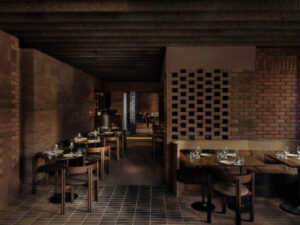
While the Frith Street side of the restaurant has a more traditional Victorian feel, the Bateman Street side was given a contemporary design, with the use of brick joining the two sites.
“The site’s two shopfronts offered an opportunity to connect their contrasting elevations through a shared design approach,” Box 9 co-founder Lou Davies told Dezeen.
“Frith Street retains a beautiful Victorian upper storey with distinctive brick patterns that reflect Soho’s merchant-trading history, while Bateman Street has a new elevation and a central section rising to the residences above,” she continued.
“The building itself suggested uniting the spaces with a single material.”
Brick was chosen not just because of its use in the building the restaurant is located in, but also because of its connection to traditional hospitality spaces and the Turkish heritage of Kid chef Sertaç Dirik.
“Brick became central to the concept because it connected so many elements of the project,” Davies explained.
“It has a centuries-old relationship with restaurants, kitchens and cooking with fire, forming the basis of traditional fireplaces and hearths,” she continued.
“It also reflected the heritage of Turkish cooking and Sertaç’s family background, while connecting to the history of the Soho building and its original brick patterns.”
Guests enter the two-storey Kid restaurant through a discreet door on Bateman Street, where they are met by a large, central grill.
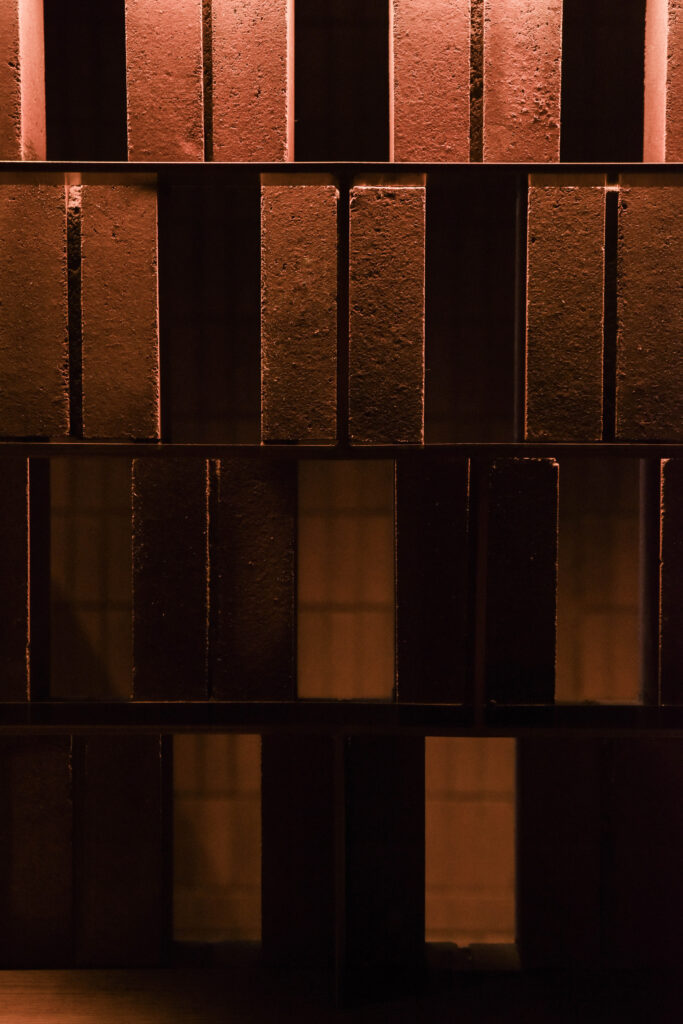
Like most of the interior at Kid, this was made from material company Kenoteq’s K-Briq, which is crafted from at least 90 per cent recycled construction and demolition waste and requires no fossil fuels or firing to produce.
According to Box 9, this means that it releases a tenth of the carbon emissions of traditional fired-clay bricks.
“We loved the idea of using brick on every surface,” Davies said of the material choice.
“There was a raw humbleness to it: wine cellars, kitchens and grills would traditionally have been built with brick,” she continued.
“It wasn’t about fancy materials; it was about using the best material for the purpose.”
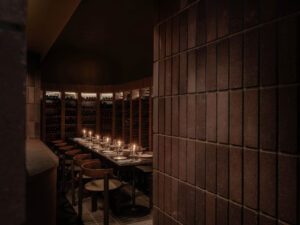
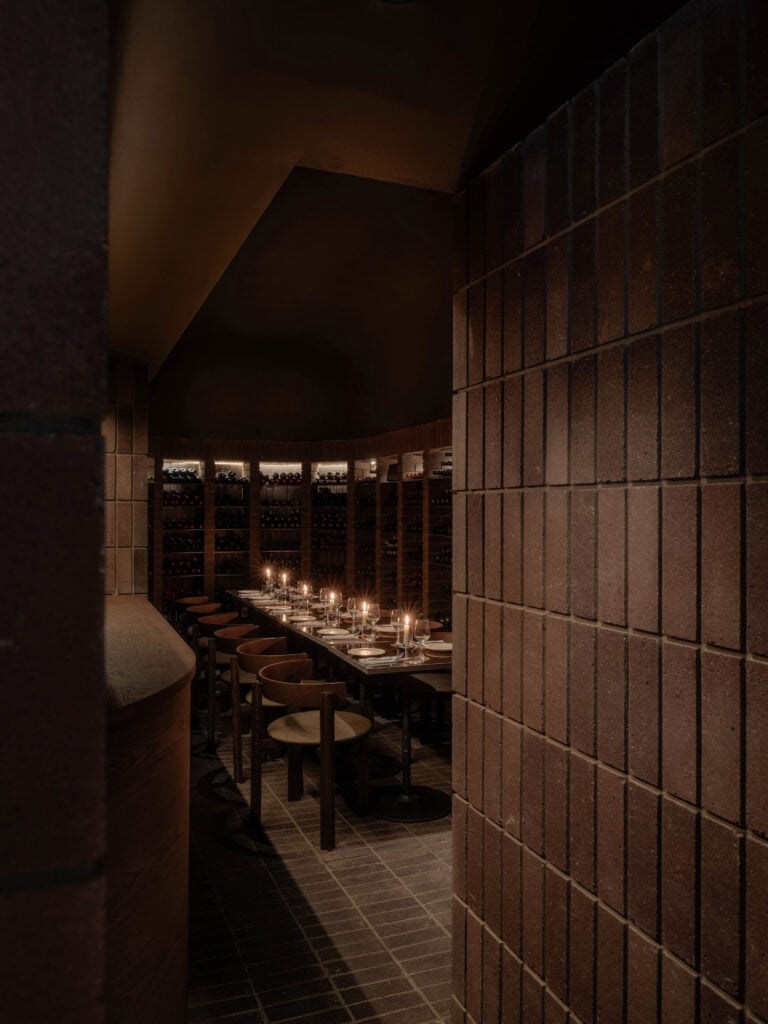
Upstairs, visitors will also find the wine room, which seats 14 people and was similarly made entirely of brick.
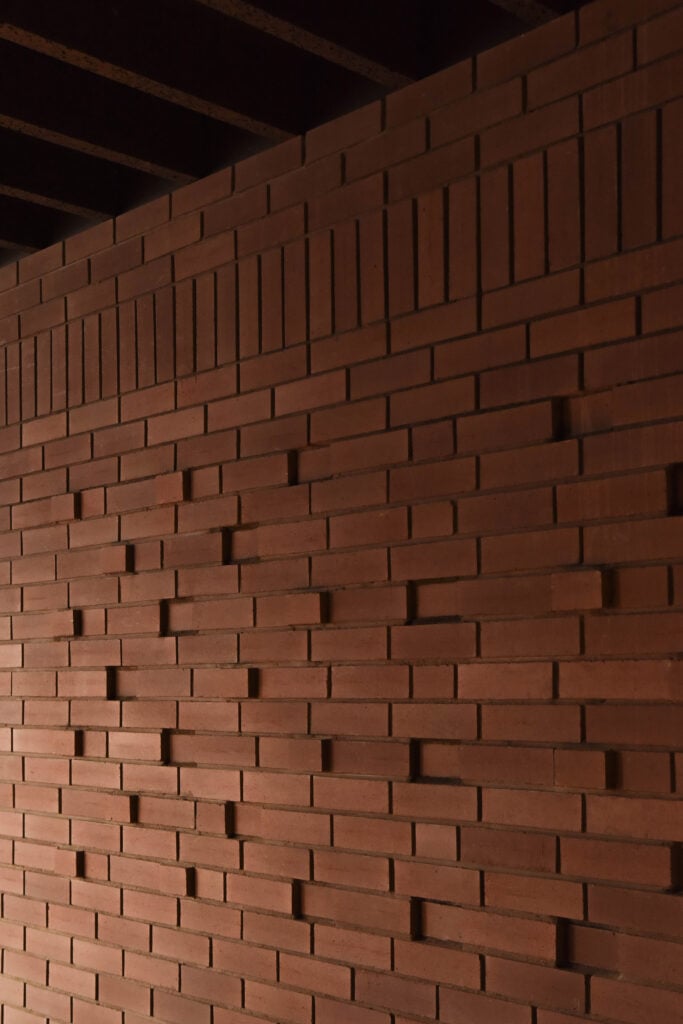
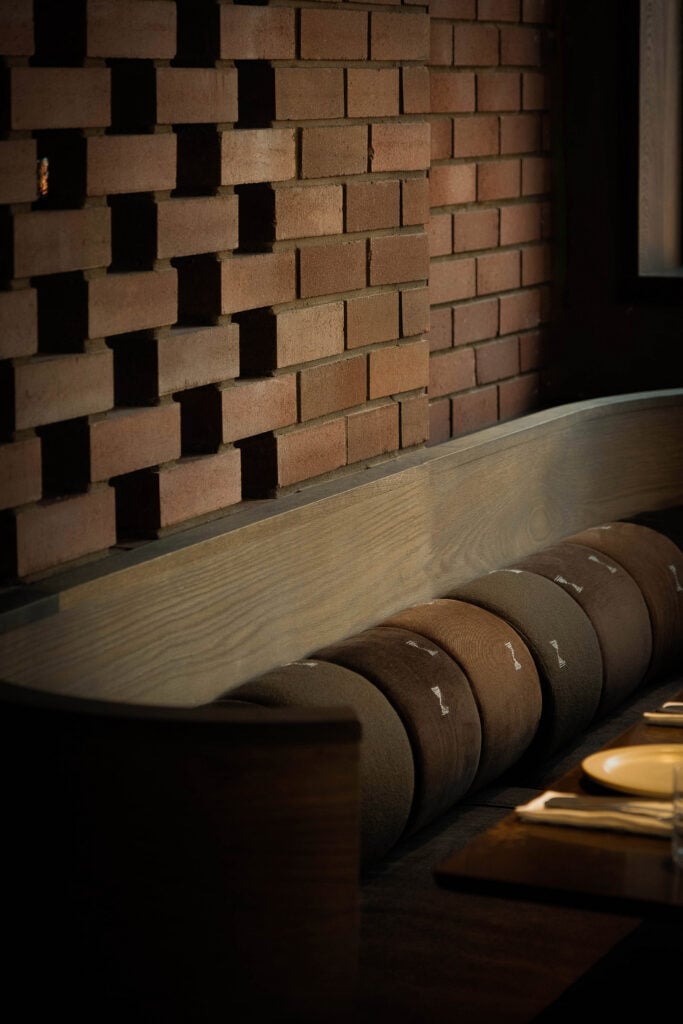
The studio chose slightly different designs to define the two upstairs rooms, using a traditional bond with a traditional joint for the Victorian side and a soldier bond and a raked joint for the more contemporary section.
Downstairs, Box 9 designed Kid’s open bakery, which features moveable bespoke tables by design firm Jan Hendzel Studio to allow the room to be used as an events space.
Overall, the main aim for Box 9 was to create a space that would complement Dirik’s food, which was formed through his cooking at his family’s restaurant Mangal II.
“We needed to create a completely unique restaurant that represented Serta,” Davies concluded.
“His personality is big, and his background is rooted in generations of cooking in Turkey and his family’s cooking style, as well as how they cooked at Mangal II. All his training was in cooking with fire.”
London has seen a spate of recent restaurant openings, including a French-style restaurant by Cassette and a London pizzeria designed by Isern Serra.
The post Box 9 used “brick on every surface” in Soho restaurant Kid appeared first on Dezeen.