









Alter design exhibition returns to Tokyo with AI-powered tea ceremony and washi paper furniture
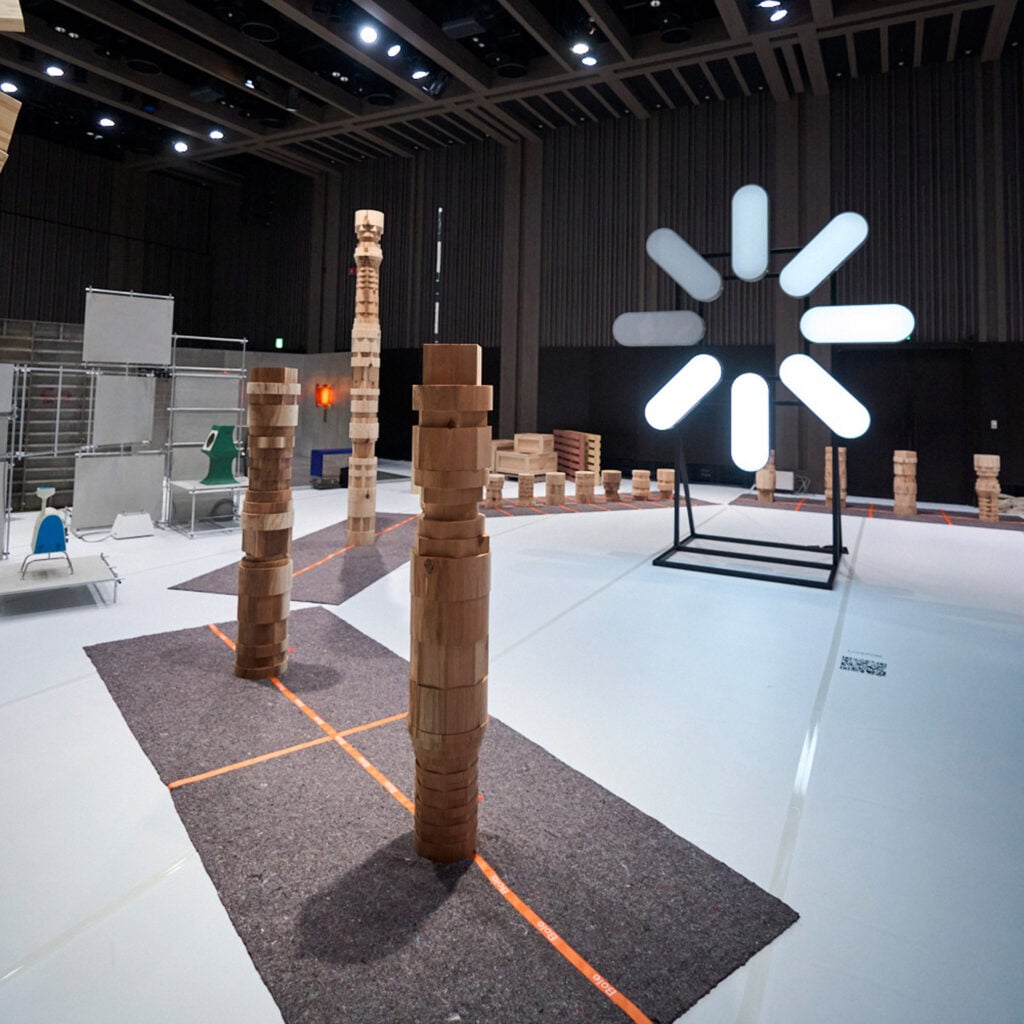

The second edition of young designers' exhibition Alter has opened in central Tokyo, featuring a glowing lung-like lamp and Japanese cedar stools made from every part of the log.
Alter is being held at Nihonbashi Mitsu Hall during the 10th iteration of Designart Tokyo, which is ongoing across the Japanese capital.
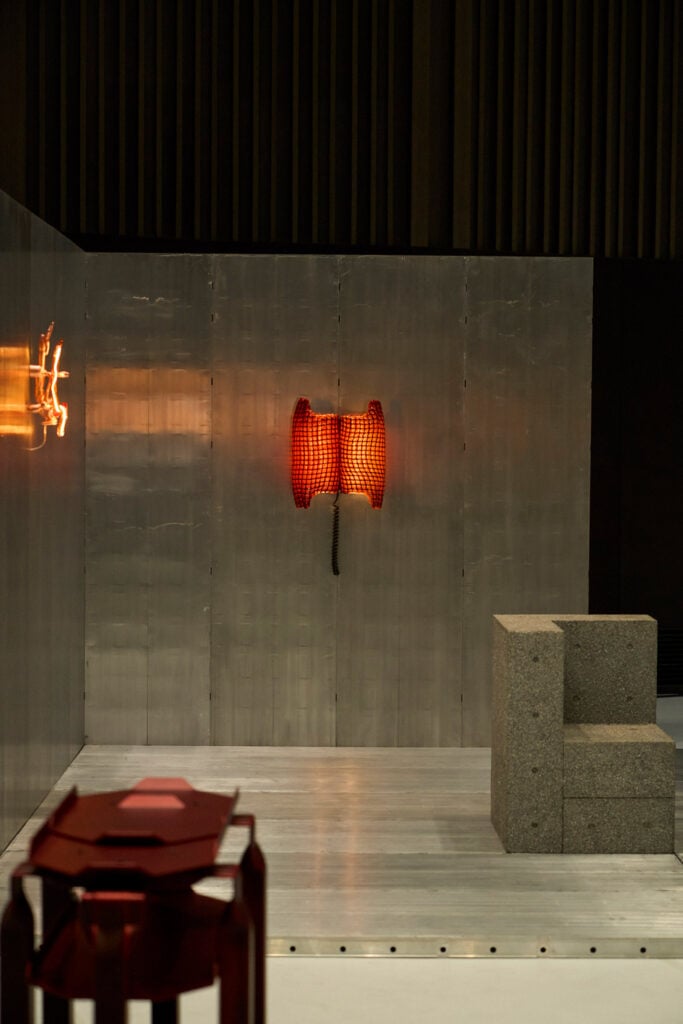
The show brings together work from 75 international creators, mostly in their 20s or 30s, united by a desire to "re-examine the value of product design" in an industry that the exhibitors say is growing increasingly rigid in its output.
Among the offerings on display is a group show of texture-heavy design pieces curated by Dutch designer Tim Teven.
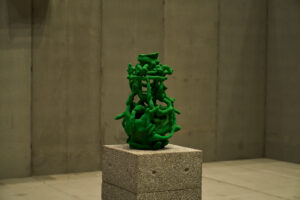
Under the title At First Contact, it includes a bright green vessel by French designer Audrey Large. Complete with protruding, tentacle-like embellishments, the vase is typical of Large's otherworldly style.
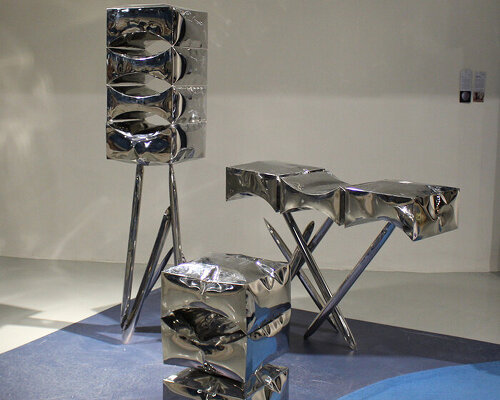
Nearby, Dutch creative Teun Zwets presents a wall-mounted, mirrored cabinet made of his recognisably glossy lacquered split wood, while Paris studio LS Gomma contributed a polyurethane rubber scone lamp with a glowing ribbed body that loosely resembles a pair of lungs.
"The pieces' attention to surface resonates with traditions within Japanese craft, where the effects of making, material behaviour and use remain visible in the finished object," said Teven, who selected pieces that draw attention to "reflection, gloss and wear".
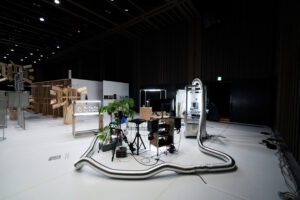
Elsewhere, Alter presents a "tea ceremony with no host" by Tariki Research Institute, created to invert traditional Japanese tea ceremonies.
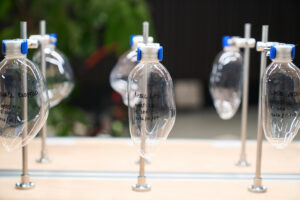
Instead of a tea master choosing the right cup for the occasion, environmental data picked up by sensors at various locations around the world is translated into organic shapes by an AI algorithm and blow-moulded into unique vessels, from which visitors were encouraged to drink.
Bole is a project by London architecture studio Pan Projects, completed in collaboration with local forestry company Morisho and Nara-based wood specialist Morisuke Mei Tree Industry.
Working with the knowledge that a typical Japanese cedar tree yields five logs, each four metres long, the collaborators made eight stools from each of these logs, cut into simple discs to use every part of the log.
For Alter, the stools are presented as a large totemic column to highlight the process.
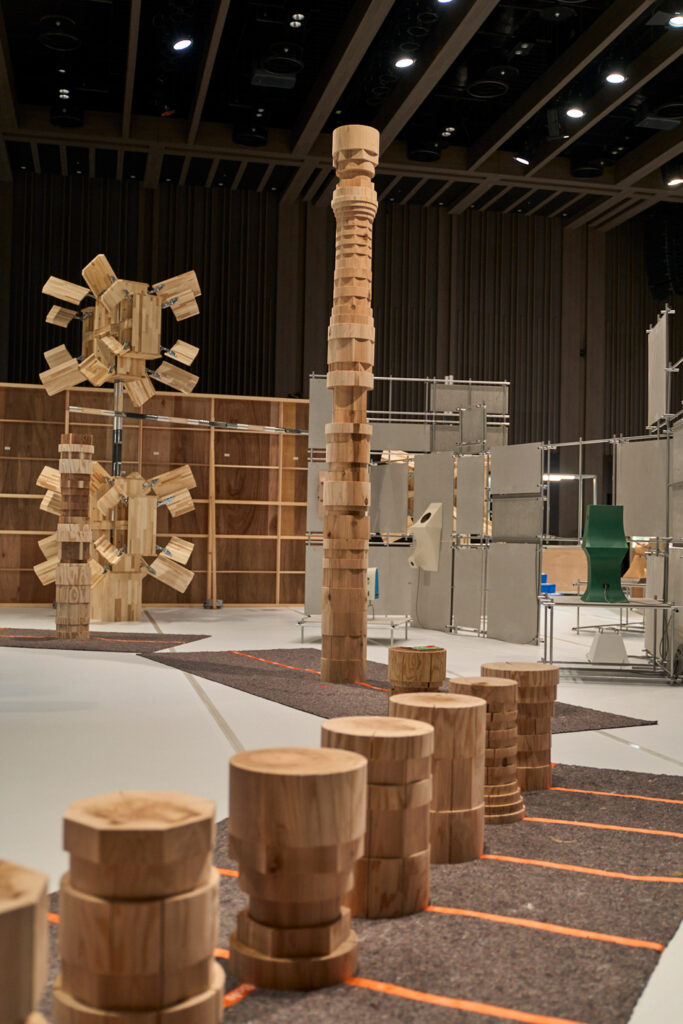
"Today in the mountains of Japan, the market value of logs is below the value of the labour of the people who grow and care for them," explained the show organisers.
"Even though wood continues to flow through construction and manufacturing sites, most of its value never goes back to the forest. Bole was born as a response to this imbalance."
Also on display is Capillary Drift, a project by Japanese designer Yuma Kano, washi paper specialist Gen Taniguchi of Nao Tesuki Washi, and artisan Kurara Omichi, who works at Uchida Dyeing Factory in Tokyo.
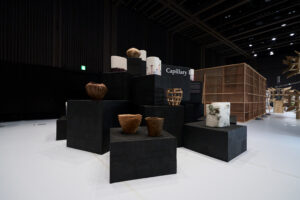
The trio is presenting a selection of stools, vessels and other material experiments made out of delicately dyed washi paper.
"Rather than seeing washi simply as a flat surface, we approach it as a complex network of interwoven fibres, seeking to reveal expressions hidden within the material itself," said Taniguchi.
The inaugural Alter exhibition was shown during last year's Designart Tokyo. At the time, the exhibition team spoke to Dezeen about their desire to revive the city's "increasingly homogenous" design scene.
Designart Tokyo 2026 takes place from 30 October to 8 November 2026 at various locations across Tokyo, Japan. See Dezeen Events Guide for an up-to-date list of architecture and design events taking place around the world.
The post Alter design exhibition returns to Tokyo with AI-powered tea ceremony and washi paper furniture appeared first on Dezeen.