






The best designs of 2025


Continuing our Review of 2025, the Dezeen editorial team has selected an extremely varied range of products, from meatball plates to cars, headphones and circuit boards, as the best designs of the year.
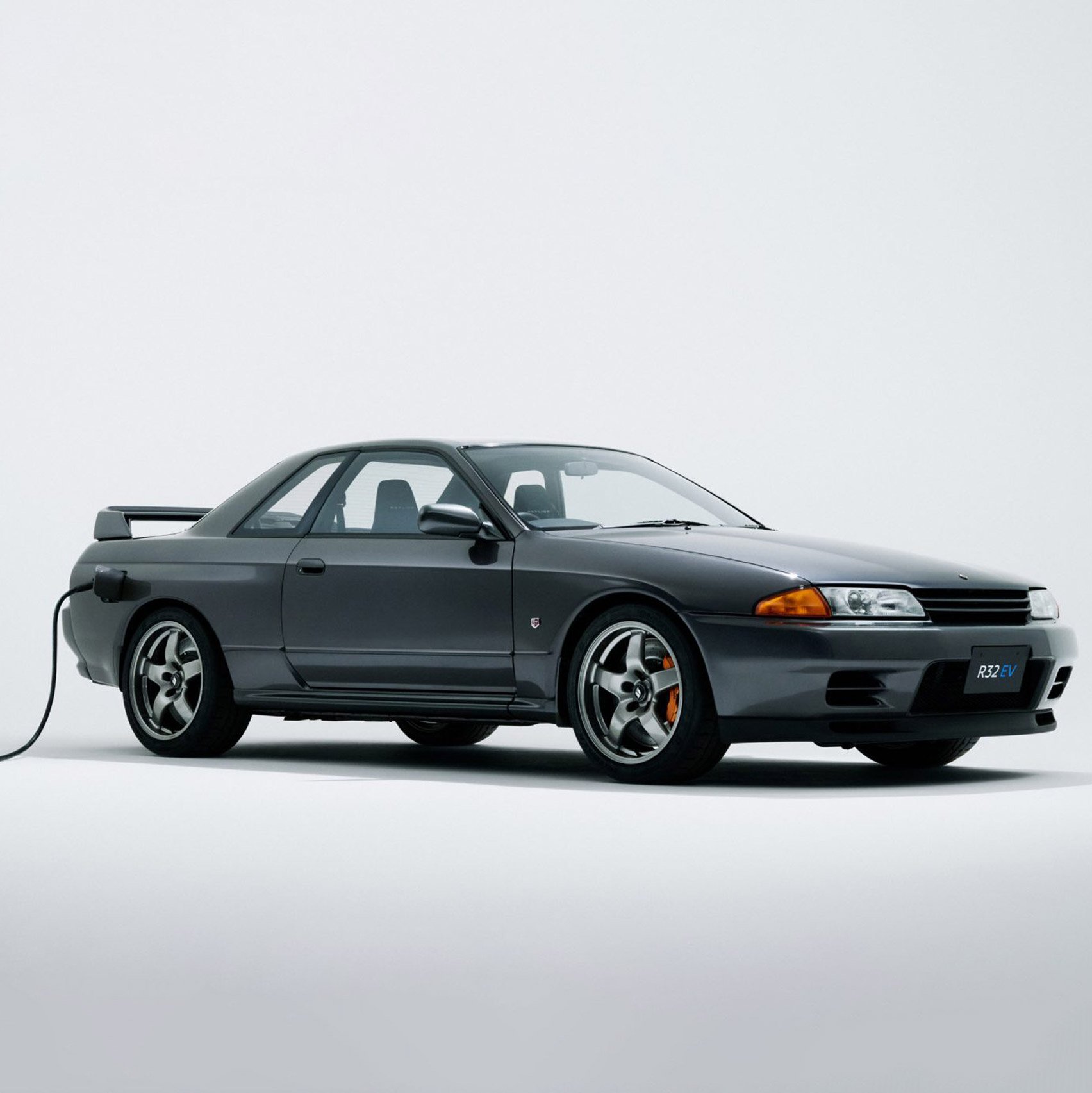
R32EV by Nissan
chosen by Jennifer Hahn, design and environment editor
"Anyone who knows me will find it hilarious that I've picked a car as my favourite design of the year, given that at the advanced age of 30, I still cannot drive and, in fact, know very little about cars. What is torque? What does a catalytic converter do? Who knows!
"What I do know is that I would have much more incentive to learn if automakers launched more models like Nissan's R32EV concept, which is fully electric but has the sexy, angular looks of a 1980s sports car.
"Sadly, this dream combo can only be found in the realm of show cars so far – see also Hyundai's Heritage Series Grandeur, which absolutely blew up when we published it in 2021.
"But I'm hoping someone will have the b****cks to actually put a car like this into production someday, even if it means I'll have to come up with another excuse for why I'm not getting my license."
Find out more about the R32EV ›

Umbrella Crate Stall by Paul Yakubu
chosen by Lizzie Crook, architecture editor
"Often it's the simplest of designs that have the greatest impact, and one of the best examples of that on Dezeen this year was the Crate Market Stall.
"Created for street vendors in Nigeria, the lightweight, modular structure provides an adjustable, mobile stall that can be quickly customised, disassembled or expanded as required.
"It recognises the importance of informal market stalls in the fabric of our cities and offers an uncomplicated but effective way to make their infrastructure more efficient."
Find out more about Umbrella Crate Stall ›

Meatball plate by Gustaf Westman
chosen by Cajsa Carlson, deputy editor
"As a Swede, I'll obviously always have a soft spot for a project that combines IKEA and meatballs.
"This year saw designer Gustaf Westman design the 'first-ever dedicated plate' for meatballs as part of his recent IKEA collection, and it's both a fun idea and a good design.
"The elongated turquoise porcelain plate has a central indentation that was designed to fit meatballs, but could hold a wide variety of trinkets.
"One of the best parts of the design? It comes with IKEA's usual assembly instructions, with detailed drawings showing how to cook the meatballs and then carefully place them on the tray before eating them."
Find out more about the meatball plate ›

Carbon Cell by Carbon Cell
chosen by Jane Englefield, design and interiors reporter
"British company Carbon Cell has created a carbon-negative and compostable alternative to polystyrene packaging and building insulation using agricultural waste.
"The entirely plastic-free material was invented by a scientist, an engineer and a designer while studying at the Imperial College of London and Royal College of Art, culminating in an incredibly optimistic example of how multidisciplinary collaboration might shape a better future for us all.
"Every part of this project seems like a no-brainer."
Find out more about Carbon Cell ›

WoolTech by Hinna Khan
chosen by Amy Peacock, architecture reporter
"A woollen circuit board was not on my 2025 bingo card, but that's exactly what designer Hinna Khan has created with WoolTech.
"The system relies on lasers to carbonise parts of the wool, forming conductive pathways surrounded by insulating un-carbonised portions of wool.
"WoolTech is still in early development, with Khan prototyping a torch and circuit board. But if it can scale, the promising bio-based design could help tackle issues of e-waste and lower demand for mined metals. Interestingly, it was the UK's mounting wool waste that first prompted Khan to find a new use for the material.
"This is absolutely the most imaginative and exciting design I've seen this year, baa none."
Find out more about WoolTech ›

Soli garden light by Milú Brunell
chosen by Ben Dreith, US editor
"Recent SCAD graduate Milú Brunell used cutting-edge microbial fuel cell (MFC) technology to create an outdoor light that is powered by the electrons released during decompositional processes in soil.
"With an elegant design that is both uplifting and clean, the prototype shows how form-making and technology can lead to functional objects that can be widely used to illuminate yards, gardens or paths.
"In a nice touch that illustrates Brunell's concern with the human-soil relationship, a spout was included in the design to feed water directly into lower soil layers, facilitating the energy-making process and highlighting our connection to the ground."

Lego jewellery by Studio GOGO
chosen by Starr Charles, editorial assistant
"Berlin jewellery brand Studio GOGO created a series of playful, customisable rings that are compatible with Lego bricks.
"Designed 'to be played with', the silver rings are composed of a simple band and a Lego-shaped plate that allows users to add and swap tiles as they see fit."
Find out more about Studio GOGO's jewellery ›

Kibu headphones by Batch.Works and Morrama
chosen by Tom Ravenscroft, editor
"With several kids that like to construct and deconstruct everything, the attraction of the Kibu headphones, which are designed to be built and repaired by kids themselves, was immediately clear.
"Each of the headphones' interchangeable parts are made from recycled bioplastic that snap together without screws or glue.
"The winner of the sustainable design of the year at the 2025 Dezeen Awards, the headphones introduce children to the ideals of sustainability and circularity, and, importantly, do it in a fun way!"

Kitchen Cosmo by MIT's Jacob Payne and Ayah Mahmoud
chosen by Christina Yao, China editor
"Though still gimmicky, this could be a useful tool in my kitchen, especially when scavenging the fridge for leftovers with limited time.
"The retro interface with buttons and switches is a bonus, given that greasy fingers can't activate the smart touch screens of the modern home appliances most of the time."
"Why do we need AI to tell us what to do when we can do it ourselves? True, but isn't that what all technology is designed for, to help us do things that we are too lazy or too busy to do ourselves? I can't wait for this one to incorporate more international recipes!"
Find out more about the Kitchen Cosmo ›

Art Basel Awards trophy by Herzog & de Meuron
chosen by Nat Barker, features editor
"Let's face it: not everyone loved these glass trophies designed by Swiss architecture studio Herzog & de Meuron, which were handed out at the Art Basel Awards earlier this month.
"Dezeen commenters saw a number of unfortunate comparisons in the amorphous design. The studio itself claimed that it sought to create objects that mimic the form of breath in mid-air.
"To be honest, I don't see that. To me, they look like ice-cream sundaes that have got gloriously out of hand."
Find out more about the Art Basel Awards trophy ›
The post The best designs of 2025 appeared first on Dezeen.