







Rethinking Museums: A Conversation with Béatrice Grenier on Architecture as Cultural Policy

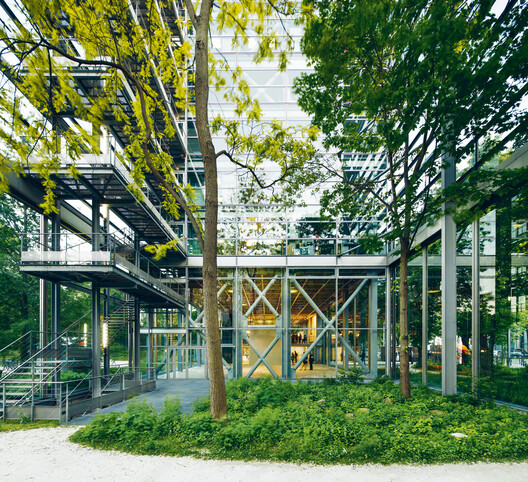
 Openness and flow imparted by the transparency between the city, the sky, the surrounding garden, and the building itself inspires a consciousness of nature in the visitors of the Fondation Cartier, Boulevard Raspail.. Image © 2025 Jean Nouvel/Artists Rights Society (ARS), New York/ADAGP, Paris, Photo ©Luc Boegly
The opening of the new Fondation Cartier pour l'Art Contemporain in Paris last October sparked renewed questions around the role, form, and future of museums. As cultural institutions continue to proliferate worldwide in this digital era, the museum itself appears increasingly in need of redefinition. Rather than offering a single model or solution, Architecture for Culture: Rethinking Museums, written by architectural historian and curator Béatrice Grenier, argues for a more contextual and plural understanding of what a museum can be: an institution shaped by its environment, its public, and the specific cultural questions it seeks to address.
ArchDaily had the opportunity to discuss these ideas with the author against the backdrop of the Fondation Cartier's newly inaugurated home on Rue de Rivoli. Housed within a restored Haussmannian building that once accommodated the Grands Magasins du Louvre, the space has been radically reimagined by Jean Nouvel as a dynamic, transformable architecture.