


















Mexico's Parque del Jaguar protects jaguars with 18-kilometre limestone wall

Mexican studio Colectivo C733 has created an 18-kilometre-long limestone wall that allows wildlife to pass through while protecting more than 1,000 hectares of forest at Parque del Jaguar in Tulum, Mexico.
The project aims to safeguard one of the region's important habitats for jaguars, whose movement through the landscape had become disrupted by roads, development and tourism.
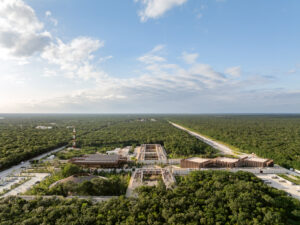
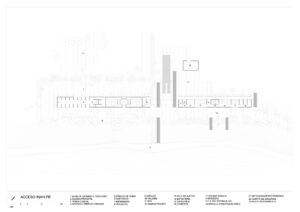
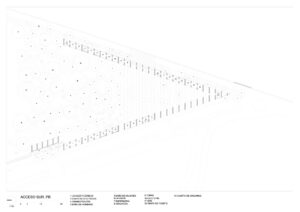
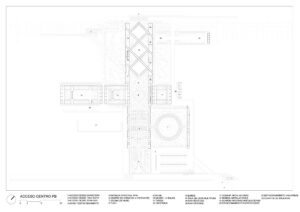
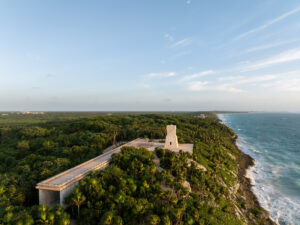

Rather than creating a conventional enclosed nature reserve, Colectivo C733 designed a network of boundaries, access points and visitor facilities intended to protect the animals' habitat while allowing people to explore the area.
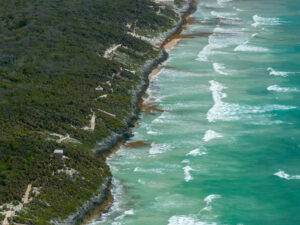
The park occupies a coastal territory containing tropical forest, mangroves, underground rivers and karstic geology, as well as the ancient Mayan archaeological site of Tulum.

Its landscape had also been affected by contaminated soil around a former airstrip and habitat disruption caused by the Cancún-Tulum highway.
At its perimeter, the studio added an 18-kilometre dry-stacked limestone wall, known locally as a tecorral, informed by traditional Mayan stone boundaries.
Built without mortar, the wall allows wildlife to move through gaps between the stones while establishing a physical boundary around the protected area.
Within the park, Colectivo C733 introduced a number of public buildings and viewing platforms, concentrating new construction in previously altered areas and leaving large sections of the territory untouched.
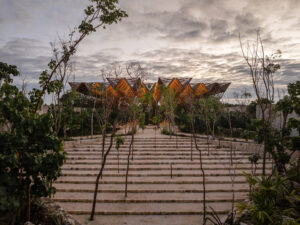
Low-impact transport routes, including pedestrian and cycling paths, connect the different areas, with electric transport also introduced to reduce the impact of visitor movement.
The routes link the park's public facilities with its archaeological and ecological sites.
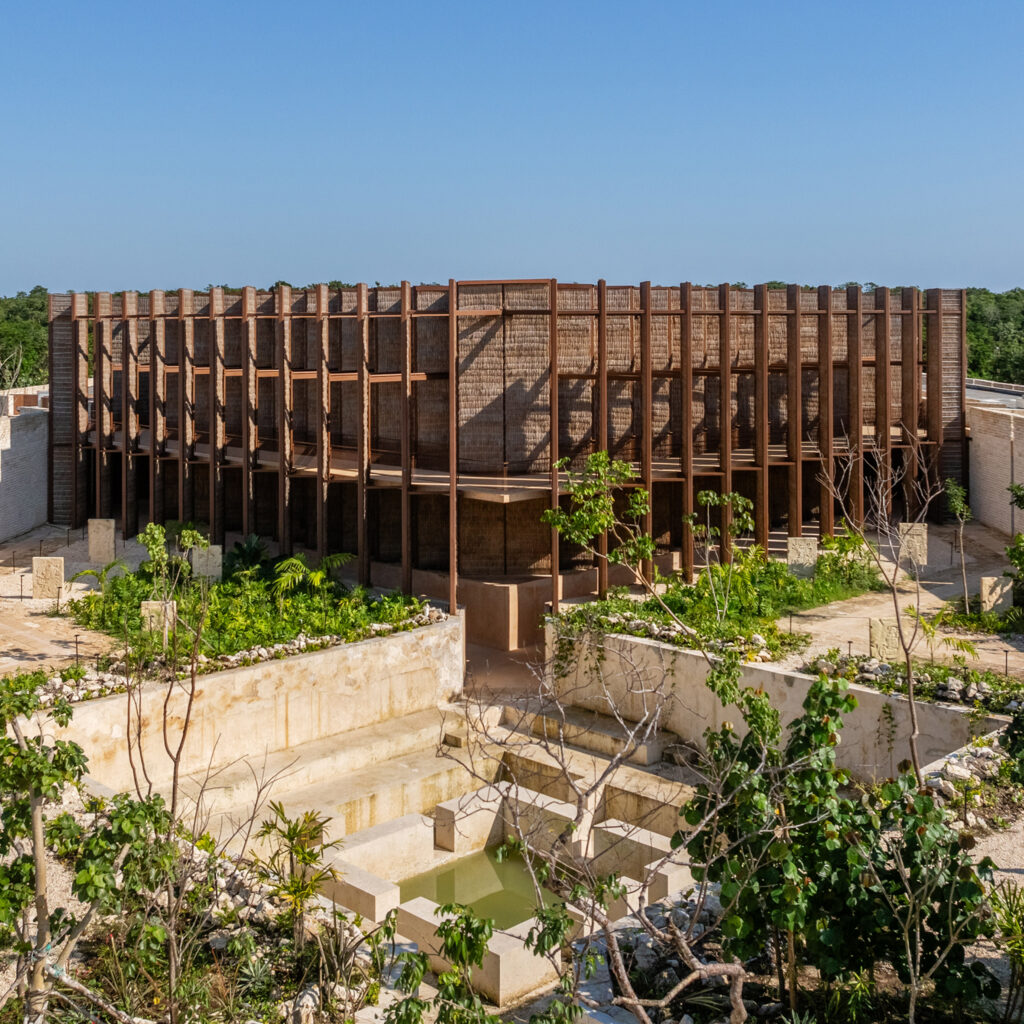
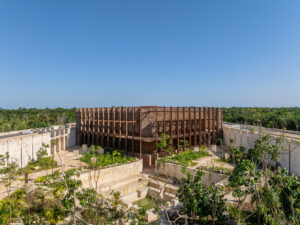
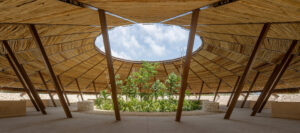
At the central entrance, a timber-framed building is screened by closely spaced vertical wooden members and topped with a woven palm-thatch roof.
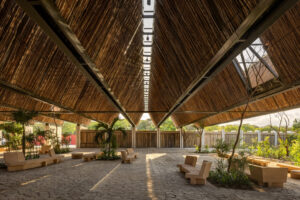
The complex accommodates a museum, cafe, shop, multipurpose room and open-air forum, alongside a kitchen designed for cooking over smoke.
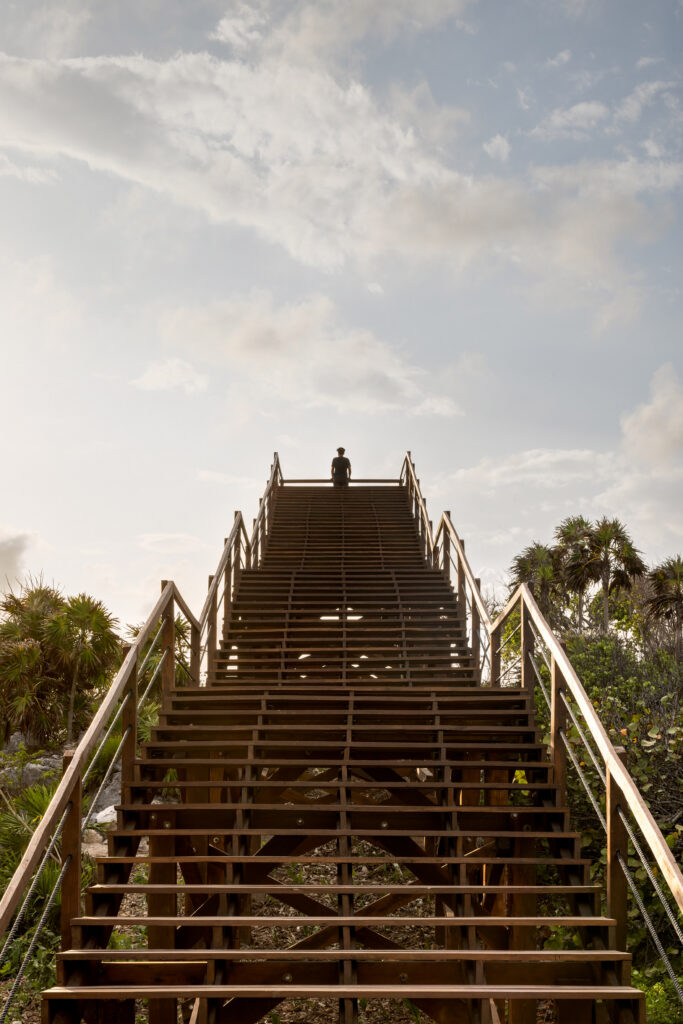
Other structures include elevated observation towers and a long suspended walkway that crosses the forest canopy, revealing different aspects of the area's geology, water systems and biodiversity as visitors move through it.
"By designing how the territory is revealed, inhabited, and understood over time, Parque del Jaguar shifts architecture from a static intervention to an evolving framework that connects environment, culture, and collective awareness," Colectivo C733 said.
Access is more controlled in sensitive areas, helping to limit disturbance to wildlife habitats, including those used by jaguars.
At the coast, stone platforms, stepped seating and raised timber staircases provide access to viewpoints overlooking the Caribbean Sea.
The buildings use locally sourced limestone, chicozapote timber, sascab – a naturally occurring limestone-based material – and palm thatch.
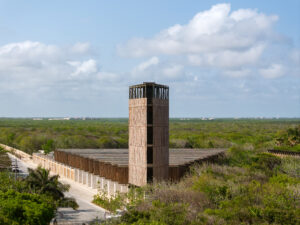
Green roofs, shaded outdoor spaces and naturally ventilated structures help reduce the need for mechanical cooling in the tropical climate.
Alongside the construction work, the project includes soil remediation, reforestation and the recovery of natural water systems.
Asphalt has been removed from previously developed areas as part of efforts to restore the ground and reconnect habitats.
Founded in 2019, Colectivo C733 brings together the practices of Gabriela Carrillo, Carlos Facio, José Amozurrutia, Eric Valdez and Israel Espín to work on public architecture and urban infrastructure across Mexico.
Its other projects featured on Dezeen include a square-shaped pedestrian pier that hovers over a lagoon in Bacalar, Mexico and a brick music school topped with a cantilevered coconut wood roof in Nacajuca, Mexico.
The post Mexico's Parque del Jaguar protects jaguars with 18-kilometre limestone wall appeared first on Dezeen.