







Headphones with built-in repair system among projects from University of New South Wales Sydney


Dezeen School Shows: headphones featuring a built-in repair system packaged in their case are among the projects from the University of New South Wales.
Also included is a 3D-printed chair and a coffee maker designed to make high-quality coffee at home.
University of New South Wales Sydney
Institution: University of New South Wales Sydney
School: Built Environment
Courses: Bachelor of Design (Computational Design), Bachelor of Industrial Design (Honours), Bachelor of Landscape Architecture (Honours) and Master of Landscape Architecture
Tutors: Melissa Cate Christ, Oya Demirbilek, Charlotte Firth, Nicole Gardner, Mike Harris, Simon Lloyd, Miles Park, Cristina Ramos-Jaime, Mariano Ramirez and Christian Tietz
School statement:
"At UNSW Built Environment we focus on architecture and design at every scale, from industrial-designed products to the architectural design of buildings and landscapes, up to urban and regional planning and policy.
"Across our different degrees, there are four common themes. Firstly, we place emphasis on sustainable design approaches that embrace circular thinking and adaptive reuse to achieve resilient and low carbon outcomes. Secondly, our social-impact design ethos seeks to meet the diverse needs of different groups, creating landscapes, buildings and products that are healthy and inclusive for all.
"We also equip students to use advanced digital tools and manage complex data, allowing them to make evidence-based decisions and develop smart ways of analysing and designing our world.
"Finally, many of our student projects engage with 'country', which associate professor Bernadette (B) Hardy, a traditional owner of Dharug and Gamilaraay descent, redefines for First Nations people as a profound union of the physical and spiritual, deeply connected to the world's oldest living culture.
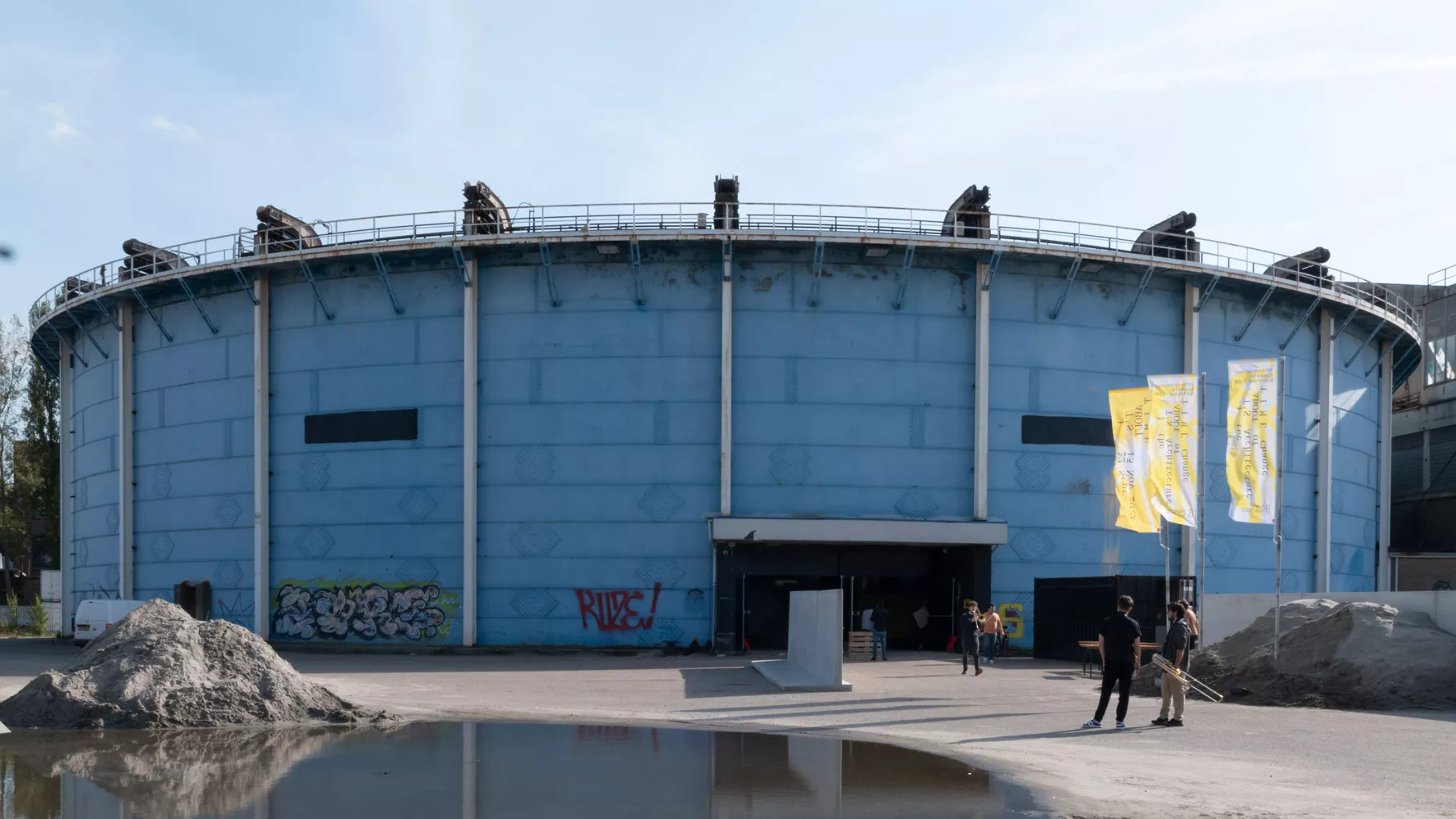
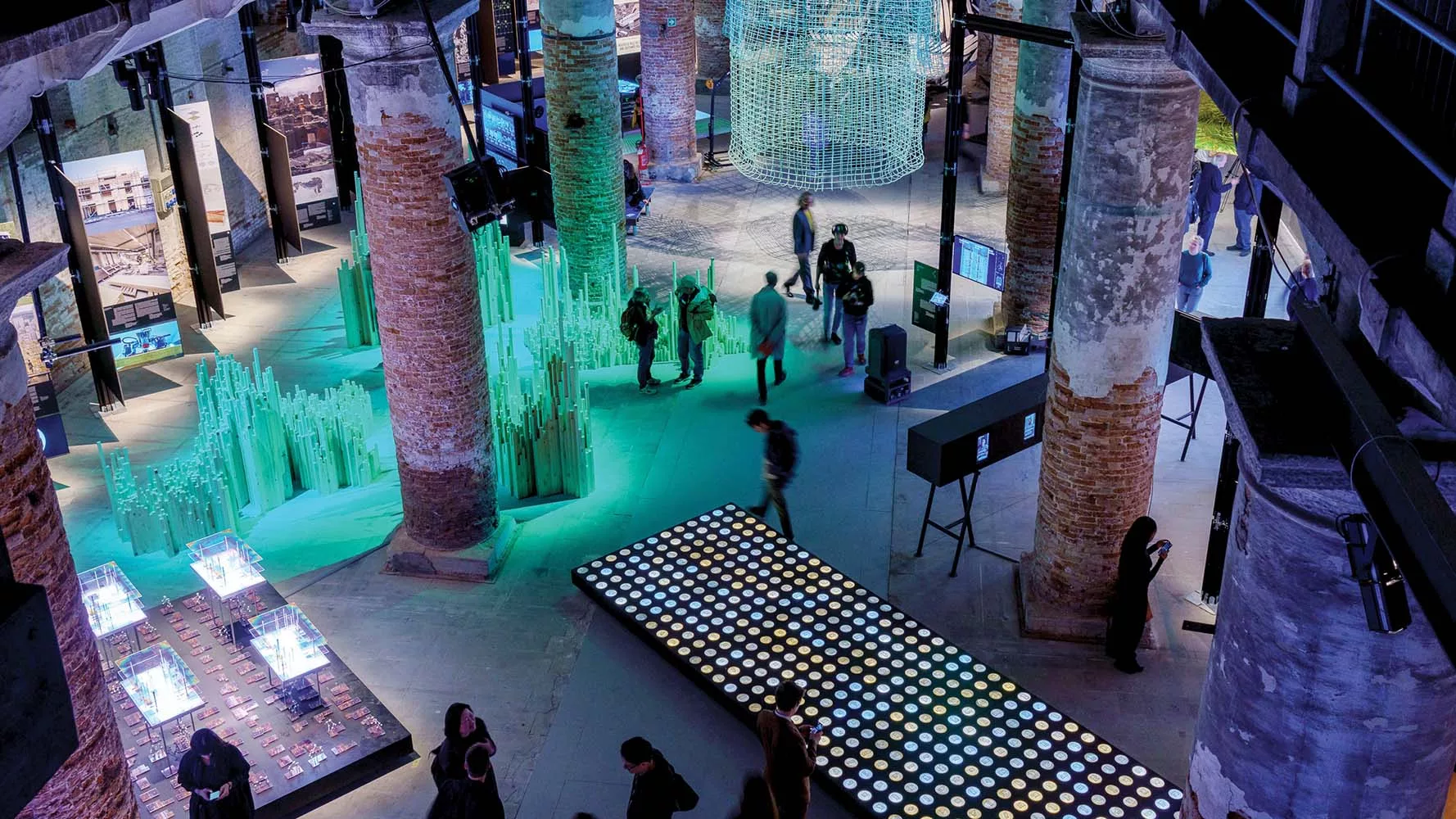
"Each year our students celebrate their capstone projects at the UNSW Built Environment Grad Exhibition, held at White Bay Power Station – a former coal-fired power station transformed into an arts, cultural and community venue."

Pivot – pt90 by Mohammad Nasha
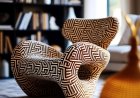
"Pivot pt90 is a full-scale 3D-printed lounge chair that explores how a continuous profile and integrated hinge can generate both structure and movement within a single material system.
"Developed from sculptural furniture and precision product precedents, the design is resolved as two interlocking components, a stable base and a pivoting backrest linked by a circular hinge joint.
"A guide pattern and extended tail element constrain the motion to prevent lateral slip and over-rotation.
"The project is driven by the constraints and opportunities of robotic-arm 3D-printing, using large-format extrusion without overhangs and with carefully controlled wall spacing, hinge clearances and toolpaths to integrate structure and mechanism in a single print.
"Iterative digital and physical prototyping informs informed adjustments to tolerances, stiffness and material use, establishing a method for designing moveable furniture specifically for robotic additive manufacturing."
Student: Mohammad Nasha
Course: Bachelor of Design (Computational Design)
Tutor: Charlotte Firth
Email: m.nashat[at]student.unsw.edu.au

Weather Where It Matters: Machine Learning for Site-Specific Urban Microclimate Analysis by Sooha Shin
"Weather Where It Matters is an interactive computational tool that predicts site-specific microclimate conditions by combining physics-based modelling with machine learning.
"Using the Surface Urban Energy and Water Balance Scheme (SUEWS) and regression Machine Learning algorithms, it learns from weather stations surrounding a chosen location to estimate localised conditions, temperature and humidity in unmeasured areas.
"Designed for the Architecture, Engineering and Construction (AEC) industry, the tool provides more accurate weather inputs for building energy simulations, addressing urban heat island effects and local variability often overlooked in standard weather files.
"The result is a scalable, user-friendly platform that improves climate-responsive design decision-making."
Student: Sooha Shin
Course: Bachelor of Design (Computational Design)
Tutors: Nicole Gardner and Cristina Ramos-Jaime
Email: soo_ha.shin[at]student.unsw.edu.au

Precinct Visualisation Pipeline by William Boge
"Precinct Visualisation Pipeline investigates how diffusion-based AI can accelerate precinct visualisation without compromising geometric accuracy by developing and evaluating a three-stage workflow that integrates parametric and AI tools.
"This includes a Grasshopper script to convert GIS lot parcels into regulation-compliant building massing; Blender to generate facades, context assets, environments and base renders; and a Stable Diffusion XL image-to-image pipeline to add detail, enhance realism and perform AI-based upscaling, producing precinct visuals in a fraction of conventional production time.
"Using an action design methodology, the workflow is assessed for efficiency and fidelity through structural similarity analysis on depth and edge maps, with a Sydney case study demonstrating 96 per cent structural similarity, indicating that AI enhancement is an effective late-stage integration point within professional AEC visualisation pipelines."
Student: William Boge
Course: Bachelor of Design (Computational Design)
Tutors: Nicole Gardner and Cristina Ramos-Jaime
Email: w.boge[at]student.unsw.edu.au

Coffee Juicer: Simple espresso for everyday brewing by Arpad Bogdam
"The Coffee Juicer is a manual espresso device that distils brewing into clear, approachable mechanics.
"Its spring-driven extraction system and integrated preparation basket allow beginners to produce a precise and balanced shot with confidence.
"For many people, home espresso feels complicated and stressful. The Coffee Juicer reimagines espresso making for novice users, guided by the principles of confidence, clarity and simplicity.
"It supports everyday coffee drinkers who find traditional machines intimidating, costly or impractical. By removing unnecessary components and relying on tools most users already own, it streamlines the workflow and lowers barriers to quality brewing.
"Approachable, intuitive and mechanically expressive, the Coffee Juicer reframes home espresso as an accessible everyday ritual."
Student: Arpad Bogdam
Course: Bachelor of Industrial Design (Honours)
Tutors: Miles Park, Christian Tietz and Oya Demirbilek
Email: arpad.bogdan.design[at]gmail.com

Doorbee: Smart security for shared living by Grace Wong
"In many shared or short-term living environments, residents often lack access to permanent security or monitoring systems.
"DoorBee responds to this gap as a compact and intelligent door wedge that provides both physical protection and digital awareness wherever you stay.
"Its high-friction base creates a secure barrier against forced entry, while integrated motion and pressure sensors continuously monitor and detect unusual door activity.
"Using wi-fi or Bluetooth, DoorBee sends immediate alerts to your smartphone, ensuring timely awareness of potential threats.
"Portable and durable, it recharges via USB-C and deploys in seconds on virtually any door. By transforming an ordinary wedge into a discreet and reliable security device, DoorBee enables users to travel, live and rest with greater confidence and peace of mind.
"DoorBee. Protecting your hive, one door at a time."
Student: Grace Wong
Course: Bachelor of Industrial Design (Honours)
Tutors: Miles Park, Christian Tietz and Oya Demirbilek
Email: gracewong3585[at]gmail.com

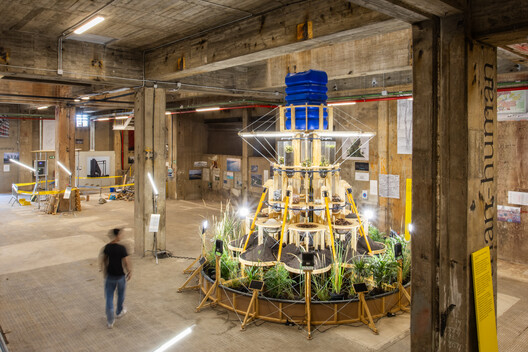
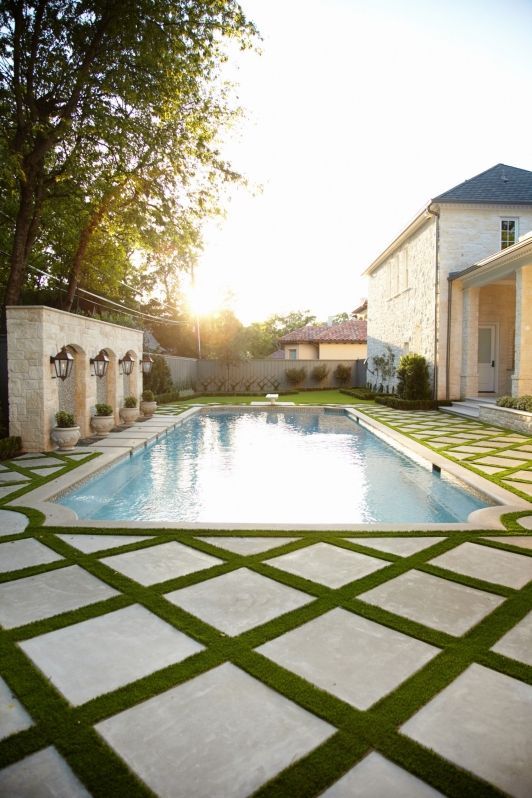
Coexistence: the Fod by Adon Hale
"The FOD is an ecological framework that guides projects towards coexistence between all species within the Urban Public Domain. Applied to your species or landscape of focus, the FOD prioritises the needs of those beyond human, both at the present and into the future.
"By using time as a dimension of design, this framework explores the possibilities of how the Urban Public Domain can function to support coexistence between Wolli Creek, the local Grey Headed Flying Fox community and residents of Turrella.
"When applied to Turrella, two sites of intervention were selected and two design interventions were tested.
"Site one returns ownership of an industrial creek edge back to Wolli Creek through landscape modification to allow phased marsh migration as sea levels rise.
"Site two creates coexistence through shared movement in Turrella Reserve as foraging patterns are recreated along flying fox lines and nightly fly-outs are observed from viewing platforms."
Student: Adon Hale
Course: Bachelor of Landscape Architecture (Honours)
Tutors: Mike Harris and Simon Lloyd
Email: adon.hale[at]student.unsw.edu.au

Reed the Room by Dyllan Hobbs
"Wull'ayi Creek and its banks represent immense history, both ecological and cultural. Turrella (reedy place) is grounded in endangered reed ecologies.
"This project represents an approach which listens to an evolving landscape, one that designs based on the site's natural features.
"This landscape responds to issues on a global scale, in which the site plays a vital role in the development of sustainable practices. Turrella's reed harvesting facility responds to issues of rapid densification and seeks to propose and amend current world practices in the burning of fossil fuels.
"Reeds as a sustainable, renewable biofuel demonstrate the human capacity for resilience and change within any situation.
"By positioning Reedland as an active contributor to local energy production, the project reframes overlooked ecologies as essential urban systems.
"This proposal illustrates how a small suburban site can participate in global shifts toward cleaner, regenerative futures."
Student: Dyllan Hobbs
Course: Bachelor of Landscape Architecture (Honours)
Tutors: Mike Harris and Simon Lloyd
Email: dyllan.hobbs[at]student.unsw.edu.au

Past Forward by Dexin (Allison) He
"Past Forward is the process of transforming an isolated historic site into a place where living history is rooted in everyday life.
"The new landscape integrates the site's past — its historic spatial features — into the urban fabric, making them accessible, experiential and interpretable by people, while enhancing the site's adaptability and resilience, allowing it to move 'forward' in response to new uses and future challenges.
"Through the design, the landscape will be a palimpsest that inherits and celebrates the site's heritage value, a system that is climate-resilient and evolves with nature and a social infrastructure that supports dynamic human activities, enhancing community wellbeing and place identity."
Student: Dexin (Allison) He
Course: Master of Landscape Architecture
Tutors: Melissa Cate Christ and Simon Lloyd
Email: dexin.he[at]student.unsw.edu.au

Bioswale Bridge Walk by Bing Han
"This project transforms a 2.2 ha site into an ecological corridor connecting Parramatta's
heritage with new communities.
"A central bioswale captures stormwater, boosts biodiversity, and forms a pedestrian spine with bridges linking east–west spaces. Plazas, shaded leisure zones and play areas support cultural events and daily activities.
"Layered planting improves thermal comfort and seasonal character, while climbing vegetation softens the Gaol wall. Barrier-free paths enhance safety and walkability, and permeable paving and microtopography increase infiltration.
"Integrated lighting and wayfinding extend activity after dusk, creating a resilient, multifunctional landscape that adapts to climate and strengthens community identity."
Student: Bing Han
Course: Master of Landscape Architecture
Tutors: Melissa Cate Christ and Simon Lloyd
Email: bing.han2[at]student.unsw.edu.au

Re:Pair: Repairable audio for everyday use by Quince So
"Most wireless earbuds are treated as disposable and discarded once the battery fails. Re:Pair modular earbuds challenge this norm by adopting a 'Design for Repair' philosophy that places intuitive, built-in repairability at the centre of the product.
"The system incorporates replaceable batteries and a straightforward disassembly method that enables easy upgrades and routine maintenance.
"A silicone strap, a push-to-open cap and a water-resistant case provide durable protection while offering a tactile and engaging user experience.
"Re:Pair illustrates how considered product design can empower users and reshape attitudes toward small consumer electronics.
"By extending the lifespan of everyday devices, it reduces environmental impact through increased product longevity, supports a shift away from throwaway culture toward responsible ownership and fosters a deeper, more enduring relationship between users and their products."
Student: Quince So
Course: Bachelor of Industrial Design (Honours)
Tutors: Miles Park, Mariano Ramirez and Oya Demirbilek
Email: quinceso.design[at]gmail.com
Partnership content
This school show is a partnership between Dezeen and University of New South Wales. Find out more about Dezeen partnership content here.
The post Headphones with built-in repair system among projects from University of New South Wales Sydney appeared first on Dezeen.