








Eight interiors where translucent shoji screens let the light in


For our latest lookbook, we've collected homes, offices and shops where Japanese shoji screens were used to create practical and beautiful sliding doors and walls.
Among the interiors featured in the lookbook are a modernist home in the US and a Tokyo office filled with natural materials.
While most of the interiors shown here are from Japan, shoji screens are also used in Western interior design – often to create a Japanese feel, but also as a practical solution to keep rooms bright while adding a layer of privacy.
This is the latest in our lookbooks series, which provides visual inspiration from Dezeen's archive. For more inspiration, see previous lookbooks featuring relaxing saunas, minimalist living rooms and kitchens featuring natural wood.
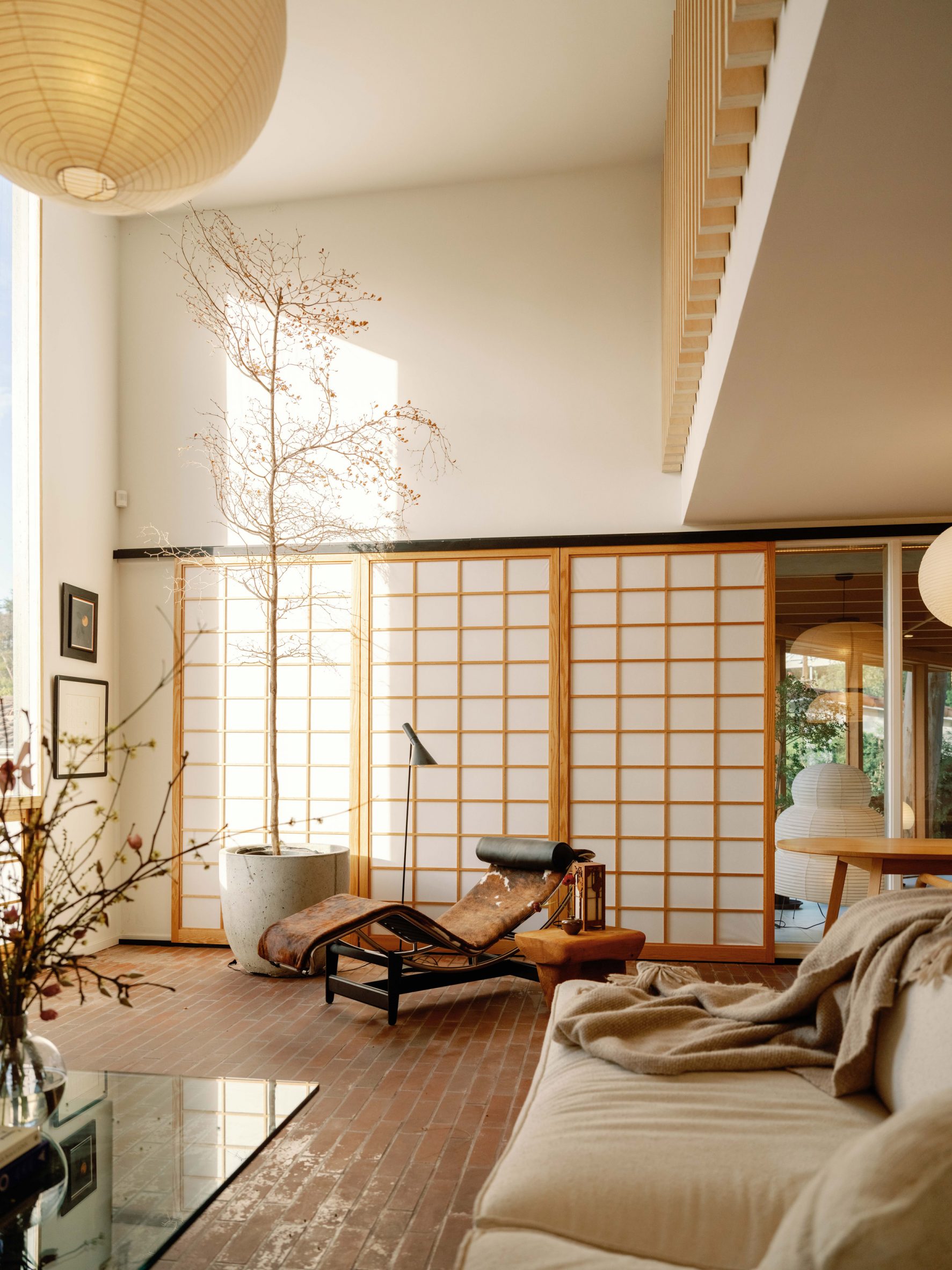
The interior of this Los Angeles home blends mid-century modern and traditional Japanese influences, with shoji screens used to create a large sliding wall in the living room.
Here, it's juxtaposed with a classic LC4 chair by architect Le Corbusier and sculptural washi-paper lamps by designer Isamu Noguchi. A brick floor matches the screen's grid pattern.
Find out more about Duane House ›

House in Saidera, Japan, by Akio Isshiki Architects
Cedar wood was used for the structure and facade of this Japanese home, which features a construction technique called shinkabe that leaves beams and columns visible in the interior.
Architect Akio Isshiki used traditional design elements such as shoji screens to create a home that would "set a new standard for contemporary living through a modern interpretation of Japanese architectural elements".
Find out more about House in Saidera ›

Matsuya Ginza lounge, Japan, by I IN
Local studio I IN aimed to turn "light itself into the material of the space" at this VIP lounge for department store Matsuya's Ginza location in Tokyo.
While most of the walls were kept white, one room was drenched in the saturated Edo purple hue. Here, delicate shoji screens and gridded paper lamps help bridge the gap between traditional and modern Japanese interiors.
Find out more about Matsuya Gina lounge ›
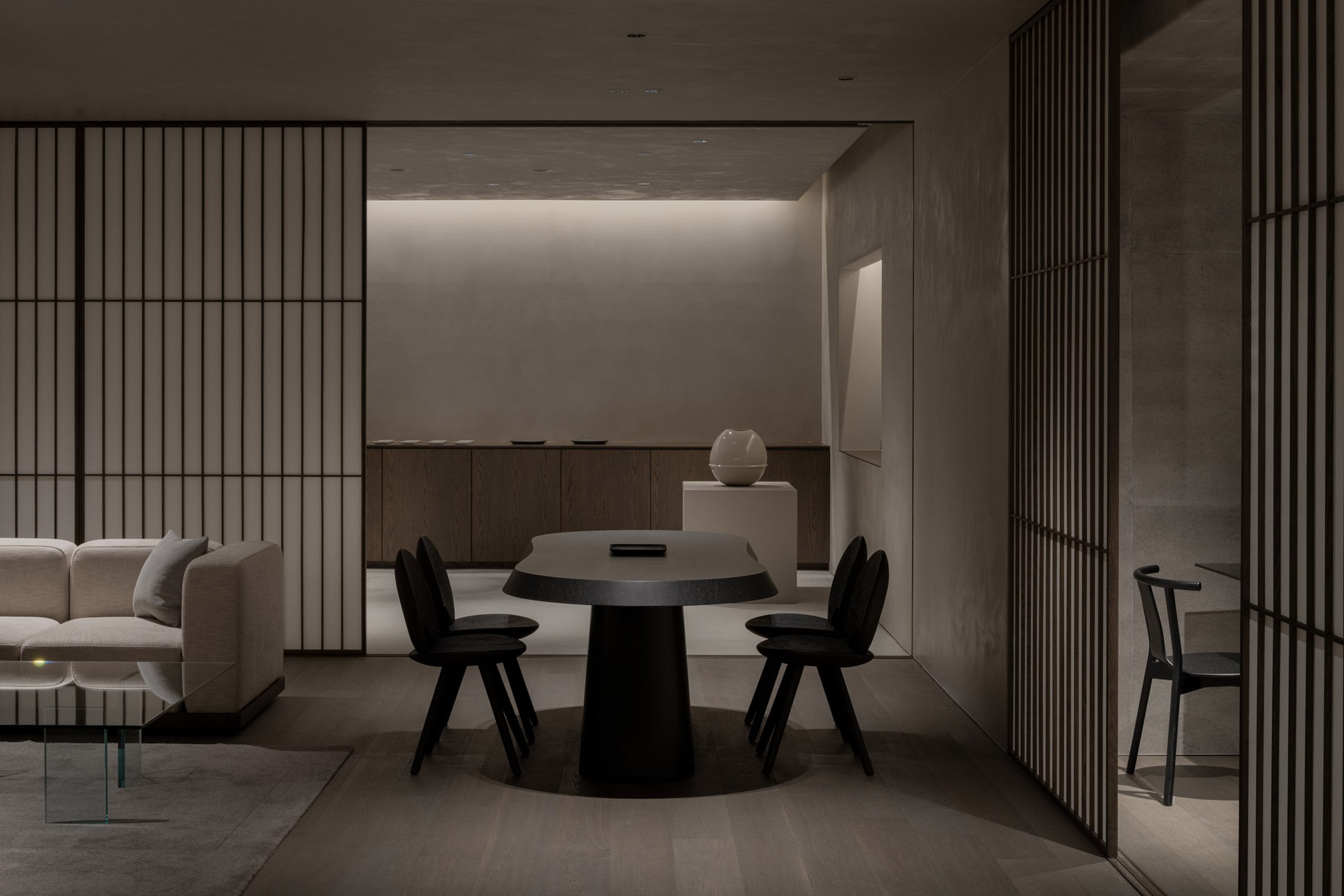
Conran Shop, Japan, by Keiji Ashizawa
Designer Keiji Ashizawa created the interior of this Conran Shop in Daikanyama, Tokyo, which spotlights products from Japan and Asia.
Shoji screens were used in the basement, where they were matched with Japanese paper that had been dyed grey and used as wallpaper.
"Shoji screens are an important element in creating a Japanese-style room but I realize that they can also be well used in both functional and aesthetic ways in a modern space," Ashizawa explained.
Find out more about Conran Shop ›

Hiiragi's House, Japan, by Takashi Okuno
This U-shaped house in Japan's Ehime Prefecture was designed so that all rooms would have views of a tree in the central courtyard.
Inside, architect Takashi Okuno used clean lines and minimal decorations to create a sense of simplicity. Shoji screens were used as walls and window screens in a traditional Japanese room, which has a tatami-mat floor and can be used as a guest room.
Find out more about Hiiragi's House ›

Symbolplus office, Japan, by Symbolplus
When designing its own office, located in a timber building designed by Japanese architect Akio Hayashi, Tokyo studio Symbolplus aimed to use natural materials in innovative ways.
In its seating area, shoji screens were used both as walls and ceiling panels, tilting over the room's angular grey sofas.
"Rather than seeking visual novelty, this project innovates through its approach to material reuse, tradition, and adaptability," the studio explained.
Find out more about Symbolplus office ›

Malibu Surf Shack, US, by Kelly Wearstler
US interior designer Kelly Wearstler created a "rustic and raw" decor for this 1950s beachfront cottage in California.
She drew on the property's original details, which included shoji screens, when creating the interior. The resulting space was then filled with an eclectic mix of vintage and contemporary pieces.
Find out more about Malibu Surf Shack ›

House in Toyama, Japan, by NYAWA
This traditional timber home in Toyama, Japan, was updated by architecture studio NYAWA to use as a holiday home. Its original wooden structure, including its decorative intricate carvings, was restored.
The studio then combined the traditional shoji screens with corrugated polycarbonate screens to provide different degrees of light and privacy.
Find out more about House in Toyama ›
This is the latest in our lookbooks series, which provides visual inspiration from Dezeen's archive. For more inspiration, see previous lookbooks featuring relaxing saunas, minimalist living rooms and kitchens featuring natural wood.
The post Eight interiors where translucent shoji screens let the light in appeared first on Dezeen.