




















Designing Streets Through the Lens of Care

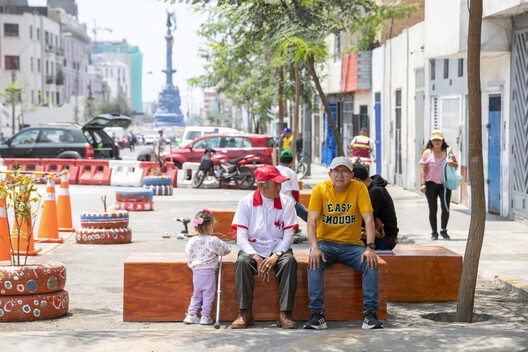
 © The Municipality of Lima
Reflecting on the modern city, Walter Benjamin described the flâneur, a figure who walks without a defined destination, attentive to details, chance encounters, and the narratives that emerge from urban space. This way of being in the city, shaped by observation and openness to the unexpected, has long been in tension with the rationalist and functionalist ideals that came to guide urban planning throughout the twentieth century. Streets designed primarily for efficiency and flow rarely leave room for detours, pauses, or the coexistence of different rhythms of life.
Jane Jacobs was also one of the voices that challenged this predominantly rationalist logic, arguing that truly vibrant streets are those capable of sustaining the diversity of everyday life, its informal exchanges, and the forms of care and natural surveillance that emerge from them. What these authors share is a fundamental insight: streets are not merely infrastructures for circulation, but social ecosystems, shaped by the relationships, uses, and encounters that take place within them.