







Design could see "long overdue shift" in 2026


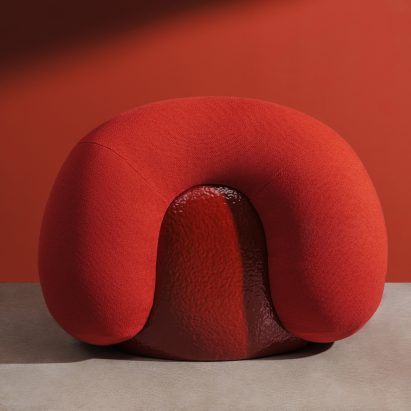
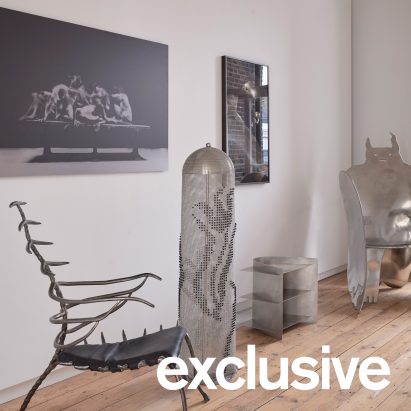
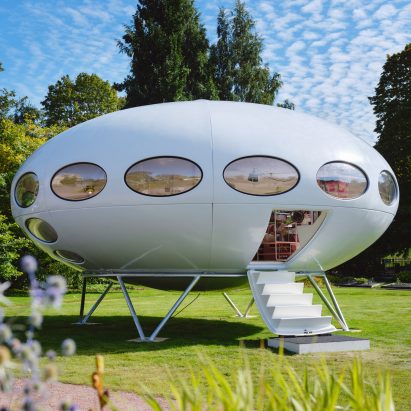
Rough-around-the-edges design could emerge as a key trend in 2026, experts have told Dezeen.
Oakland-based designer Nick Foster has spent his career exploring the future for companies including Apple, Google, Nokia, Sony and Dyson.
Pondering the year ahead, he made a plea for less polish in 2026.
"A kind of homogenous gloss"
"I have a desperate yearning for design to loosen its collar," he told Dezeen. "For years we've been drowning in grids, immaculate renderings, rational design systems and products buffed to within an inch of their lives."
"The machinery of commercial design has resulted in a kind of homogenous gloss: everything is neat, tidy, polite and free from anything gritty, confrontational or different."
This year, he is keeping an eye on designers "who aren't afraid of roughness, texture and unpredictability".
Similarly, Amsterdam-based designer Carole Baijings believes imperfection could be about to have its moment.
"It's nice to see the beauty of imperfection, the beauty of having it differently," she said.

Foster believes that the proliferation of generative artificial intelligence (AI) could be the driver behind the change.
"I think we're long overdue a shift in this direction, and the homogeneity brought about by our emerging generative AI aesthetic might push us more quickly in this direction," he said.
Oslo-based design entrepreneur Natsai Audrey Chieza emphasised the importance of humanising rapidly-evolving technologies such as generative AI.
"I think design needs to think hard about how it humanises technology," she said.
Research and development will be a crucial element of this and cultural institutions could play an important function, Chieza added.
"I think there are institutions that are already starting to understand their role in shaping how our technologies exist," she said, citing the Future Observatory at London's Design Museum as using its funding to put the right designers, technologists, social scientists and public in the same room.
Amid ongoing global turmoil, designers expect that sustaining financial stability will continue to dominate the mindset of 2026, to the detriment of experimentation.
"Design will be less romantic and more about risk management, future proofing and building scalable systems instead of products," said London-based industrial designer Jo Barnard.
"Efficiency will be the name of the game, from budgets to supply chains," she cautioned. "We mustn't let this squeeze the joy out of design though."
"Uncertainty tends to breed conservatism"
Foster suggested that many designers will find themselves forced to make safer choices just to keep the lights on, and that this will dictate the kind of creative work that gets commissioned, funded and seen.
"Volatility in global politics, changes in technology and the dissolution of long-standing norms has created a climate where organisations feel fundamentally uncertain about the future," he said.
"Uncertainty tends to breed conservatism, and in environments like this, creative budgets are always the first to be trimmed. Rightly or wrongly, many people feel that exploratory, expressive or speculative work seems frivolous in times like this."
Partly driven by market conditions, Baijings predicts companies will launch less new things in 2026. She believes brands will focus their time and investment on a more concentrated selection of products, released less often.
That in turn could lead to a slowdown in the design calendar, she suggests.

"I mean, there are so many fairs and events, why do we need another?" she said. "I think it's about stepping a little bit back from the rat race."
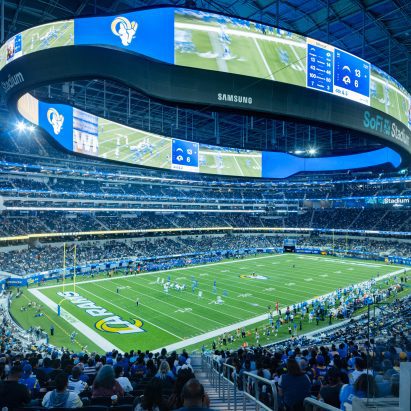
Stockholm and Venice-based designer Luca Nichetto goes further, predicting the end of the prevailing trade fair model.
"I think 2026 will be the end of the idea of a trade show," he stated. "We will see the big crack in the trade show this year."
He suggests that, despite the jolt inflicted by the Covid pandemic, the trade fairs never really switched their mindset to what a meeting place for people in the industry could become.
"In 2027 and 2028, the trade show will be quite different," he said. "I think it's going to become much more local."
A potential side effect, Nichetto suggests, could be the emergence of more projects from nations not normally considered "design countries".
"I think we will see a lot of these designers working in a different country and culture doing things that really have a meaning, discovering and applying an idea for a project in an infrastructure that maybe wasn't already well developed," he said.
"You can start to see that they have really good results in terms of impact. They are working not only on the idea for a final product but also on ideas for how to elevate the community to support their product."
Design futures and sustainability expert Caroline Till believes there are other causes for optimism. She feels buoyed by a growing politicisation from students and hopes to see that activist energy grow in 2026.
"When I ran a masters course at Central Saint Martins 10 years ago, it was hard to get students activated to shout about or stand up for what they believed in," she said.
"Now, from what I see as a visiting lecturer across the UK and EU, it feels there has been a reactivation within students to take a bolder stance and use their voices, and that is exciting."
The top photo, of Kwangho Lee's Shell exhibition, is by Daisuke Shima.
Dezeen In Depth
If you enjoy reading Dezeen's interviews, opinions and features, subscribe to Dezeen In Depth. Sent on the last Friday of each month, this newsletter provides a single place to read about the design and architecture stories behind the headlines.
The post Design could see "long overdue shift" in 2026 appeared first on Dezeen.