








“Pinnacle Sky” Reimagines Mountain Modern Architecture in the Utah Wilderness
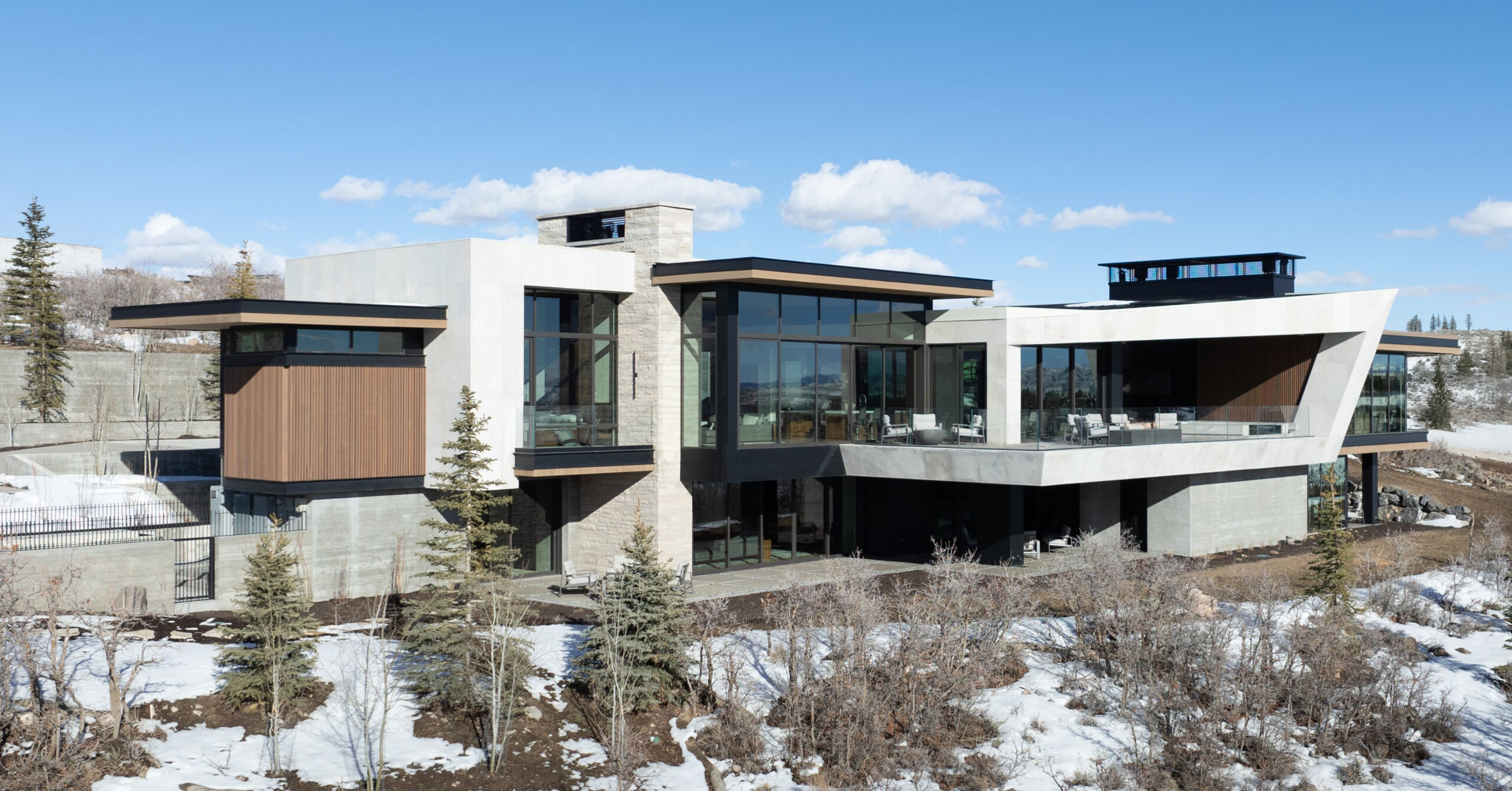
Perched high in the Promontory region of Park City, Utah, Pinnacle Sky captures the contrasts of mountain modern living: bold yet serene, daring in form yet harmoniously embedded within its alpine surroundings. Designed by Michael Upwall Design Architects, the home unfolds across the hillside like a piece of origami, every plane of limestone and glass responding to mountain contours and the changing light.
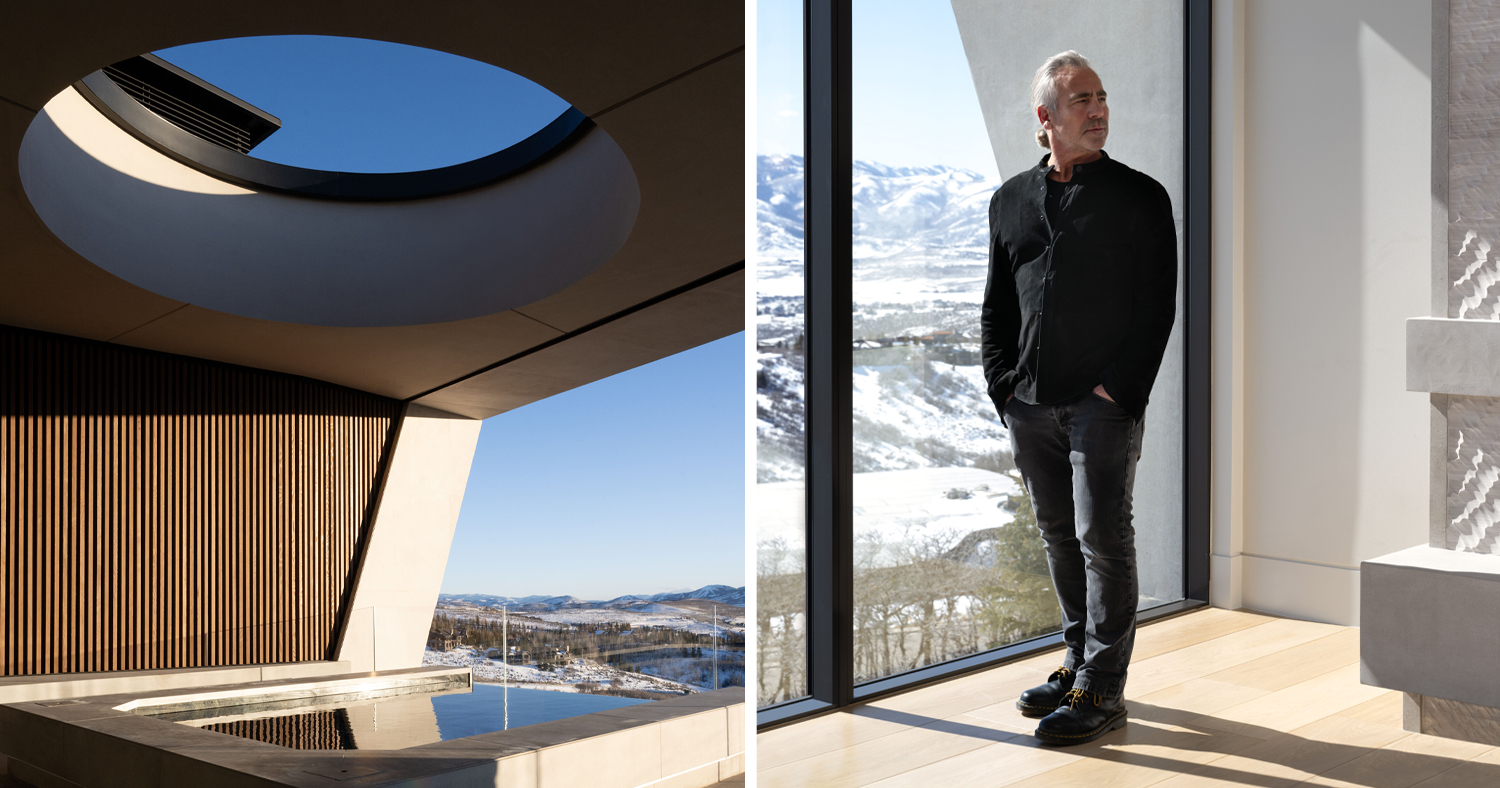
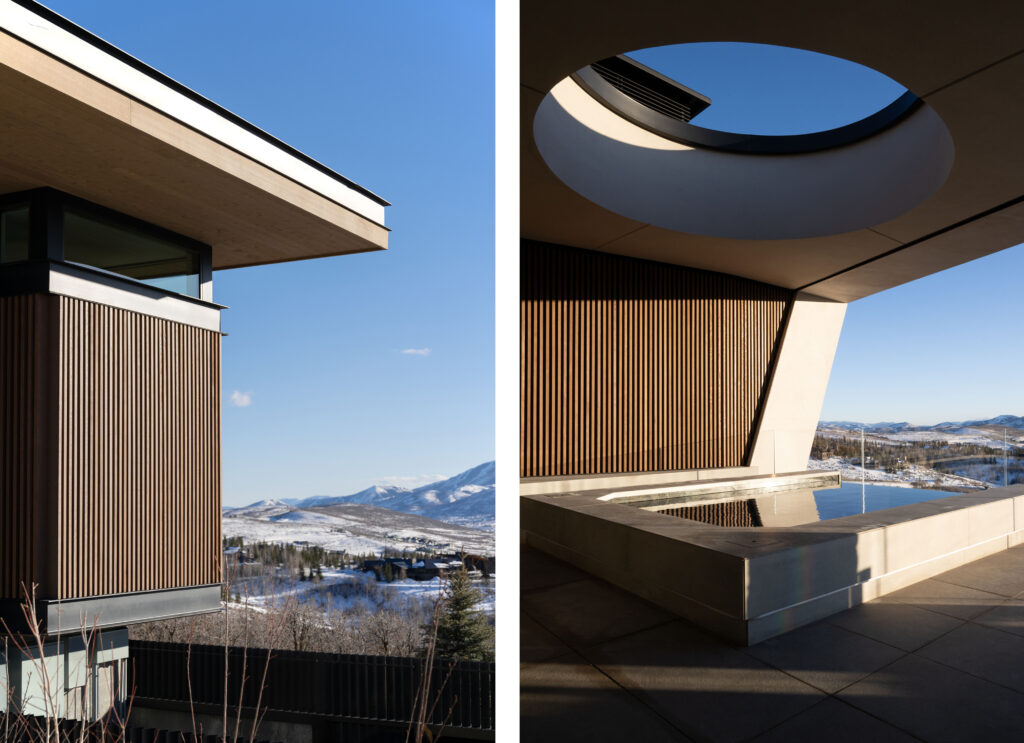 “I grew up in Utah, in the mountains,” says architect Michael Upwall. “I’m a mountain boy … it’s a sacred place for me. If we’re going to go in and move into the wilderness, we want to make sure we create something that is worthy of it, that can be a part of it, not just detract from it. So what we do is try to be of the mountains, to be of the land, and make that our priority.”
Architecture That Serves the Landscape
Pinnacle Sky rises from the Utah hillside like a geological formation — faceted, dynamic, and deeply attuned to its alpine surroundings. Rather than dominating the terrain, the house threads through it, folding into the slope with crisp geometries that mirror the surrounding ridge lines. “This home is situated in a development called Promontory, which … sits back and looks up at the ski mountain,” Upwall explains. “So that’s your view. Instead of being part of it and in it, you get … the panoramic experience of the mountain.”
The design began with a simple walk through the trees. “We met [the clients] on the lot and walked the property with them … and we just kind of wandered on the lot until we found a spot that felt magical to them,” he recalls. “What’s your favorite spot here? … What’s your favorite view? … We literally built the home around those ideas.”
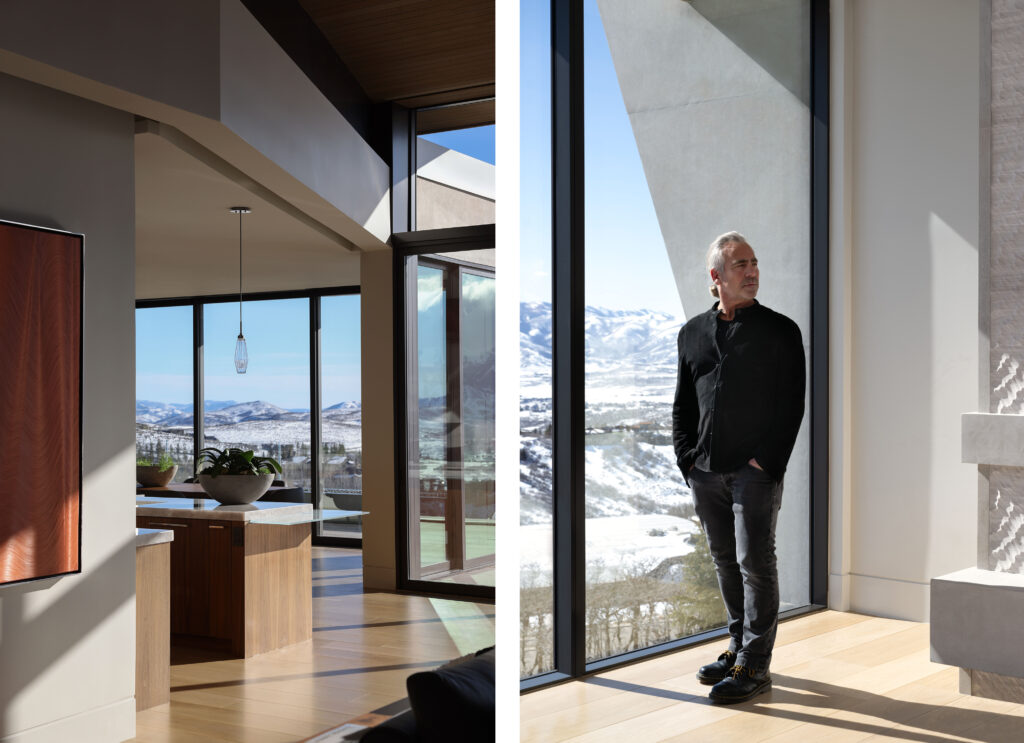 The house orients itself around an open-air living space — a protected courtyard that blurs the boundary between interior and exterior. “The home is really designed around the outdoor living room,” Upwall says. “That is a room that’s wrapped by floor-to-ceiling doors that open up and disappear. We are blurring that line between inside and outside space. … Even if you’re inside, you’re connected to [the surrounding landscape].”
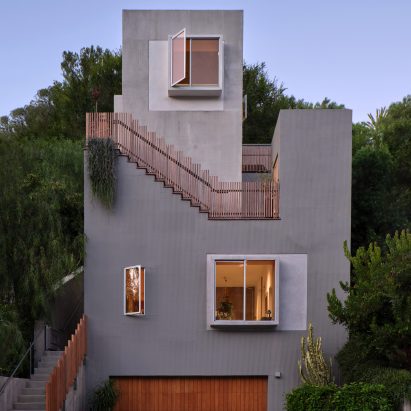
“As you view the home from the exterior, it’s very sculptural,” says Upwall. “It was inspired by origami — the act of origami, where that single plane of material, if you treat it the right way, can become an object. I see the home as a bird in flight, connecting with the wilderness. It’s not a static place … It’s living with the place.”
The Art of the Frame
For Upwall, framing the view was both a technical and poetic act. “The whole modern philosophy is to get out of the way of the view, to get out of the way of yourself, and to respond to what the sense of place is,” he says. “What is the landscape, what is the land — to be a part of that, the best way to do that.”
Achieving this demanded a blend of creativity, customization and collaboration — which is where Marvin came in. “We found the Marvin Modern collection to be so accommodating to our design intent,” says Upwall. “For so long, I was working with window companies, and they would tell me what my windows had to look like … and it drove me crazy. I don’t want a window company to design my home for me; I want one that can be flexible enough and to have a product that can respond — to have them always ask: ‘How do we get to yes?’ instead of starting at no … that collaboration and that connection is key. I found that Marvin Modern really hit those marks for me.”
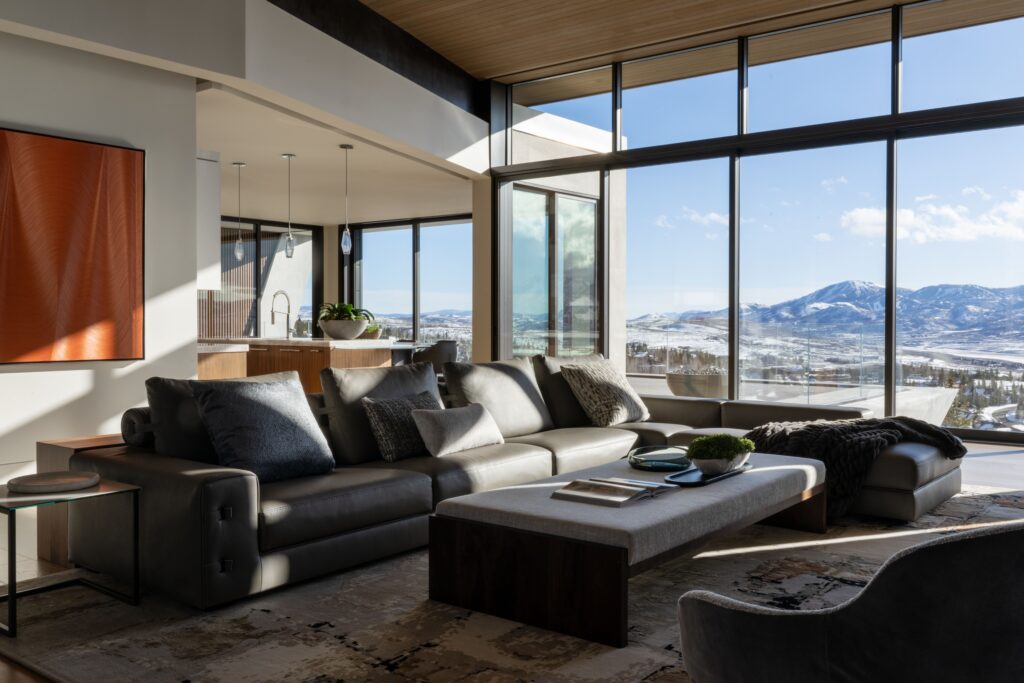
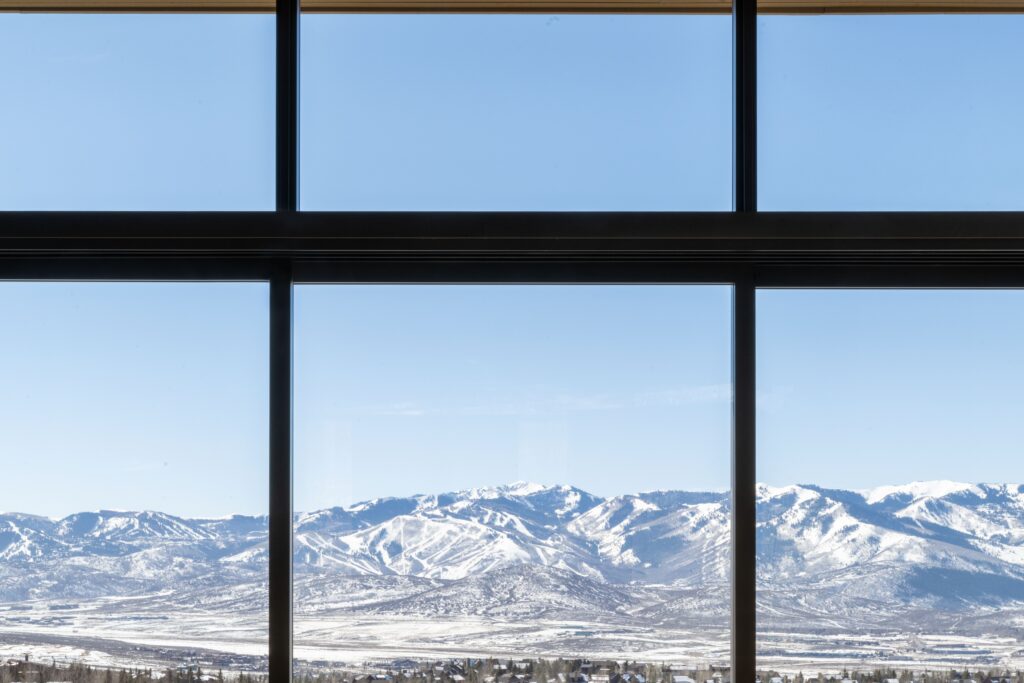 The result is undeniably breathtaking — huge expanses of glass envelop the living spaces, uninterrupted by heavy structure. “The window panes are extremely large, while the mullions are very small,” says Upwall. “They met that need — I was immediately connected, in my soul, to the mountains. It’s a consistent language that’s framing the view, and it’s not cluttered … even though they’re beautiful windows, I’m not looking at the windows. I’m looking through the eyes of the house.”
The material composition of the windows was equally integral. “It’s an authentic frame,” says Upwall. “The materials help with the construction of the thermal bridge. The building has to have a skin where, on one side, it is freezing cold … but on the inside, it’s always comfortable. To be able to bridge those two extremes [is critical]. The technical qualities of the window meet that mark as well.”
Quiet Modernism
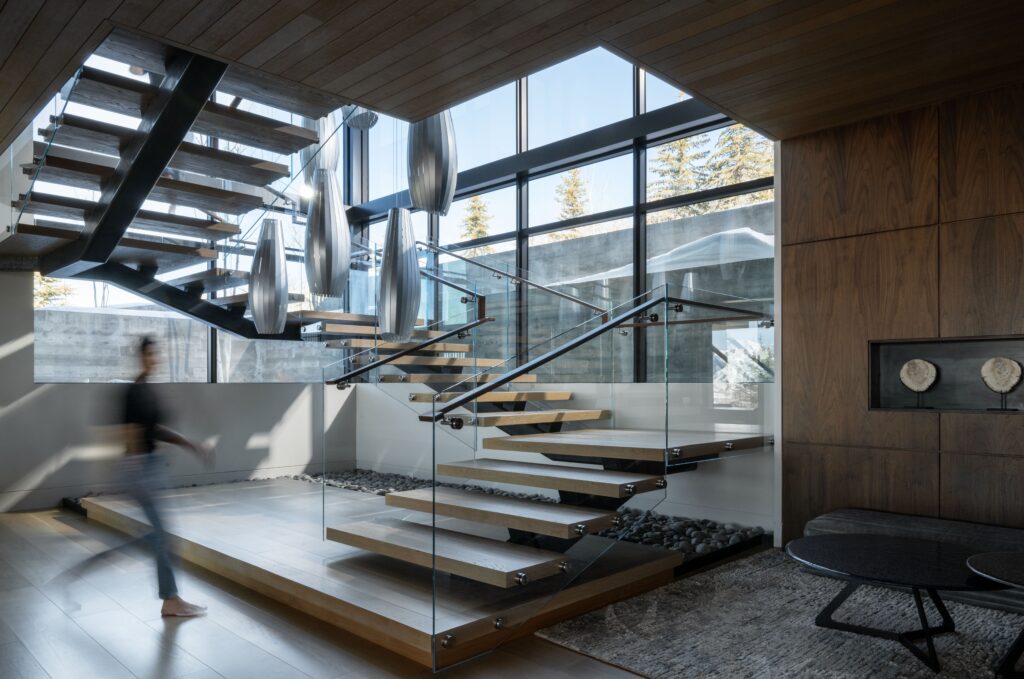
The stairway, enclosed in glass, becomes a spatial centerpiece. “I thought the windows could act as a jewel box to frame these stairs and present them to visitors,” says Upwall. “When you arrive, you see the stairs right away. The mullions of the windows create rhythm like a musical staff, as if you are moving through the music. It gives you context to help celebrate … the act of movement. You’re involved in the dance.”
 Upwall’s collaboration with Marvin extended beyond windows to include expansive multi-slide doors that erase boundaries entirely — and can be opened effortlessly. “The doors slide easily,” he says. “Instead of doing all of the gymnastics to get ready to open the door … it’s a single movement and a slide. That elegance was very important to me. I have my cup of coffee and I’m walking, and oh, suddenly I’m outside. I didn’t really have to think about that transition … that’s the idea.”
For Upwall, the design philosophy is as much about restraint as innovation. “I believe that Marvin Modern … adhere[s] to the modern philosophy of design,” he says. “It’s the simplicity of it. It’s not about the busy-ness, the bells and whistles. It’s about the silence. That’s really what we want, so we can hear the music.”
A Beacon of Light
As day turns to dusk, the house seems to glow from within — its glass stair tower transforming into a beacon. “At night, it’s a beautiful lantern,” says Upwall. “It gives you that ‘welcome home’ experience. … I just love the way that the sculpture evolves and [provides] that sense of arrival as a human.”
 In Pinnacle Sky, every gesture — from the folded limestone planes to the thin-framed windows that dissolve into the horizon — is an act of deference to the mountain itself. “We can’t compete with it,” Upwall says simply. “All we can do is acknowledge it and be of the mountains, to be of the land.”
For architects designing homes that embrace the landscape through precision glazing and performance, explore Marvin’s architectural solutions at Marvin.com.
All images courtesy of Marvin.
The post “Pinnacle Sky” Reimagines Mountain Modern Architecture in the Utah Wilderness appeared first on Journal.